Tag: historical true crime book

  • Poisoners

    Poisoners

    13 Criminal Cases of Poisonings from around France

    by Serge Janouin-Benanti

    Translated by Eva N. Siskowski Boatwright

    Book cover: Poisoners, 13 Criminal Cases of Poisonings from around France

    Here’s a book that turns true crime into a country-wide road trip, one arsenic pinch at a time. Poisoners — 13 Criminal Cases of Poisonings from around France gathers thirteen historical cases and retells them as brisk, novelistic short stories, each planted in a different city or village and each orbiting that most intimate, secretive method of murder: poison. The author, Serge Janouin-Benanti, has long specialized in “true and cruel tales,” and here he lines up a gallery of schemers and victims—lovesick spouses, swaggering frauds, fortune-tellers, self-styled healers—then lets the courts, the newspapers, and the nascent science of toxicology close the net. It’s a collection built for anyone who likes their history with momentum and their mysteries with receipts. The book is presented in English translation by Eva N. Siskowski Boatwright and openly grounded in archival sources (national, departmental, and period press), a fact that keeps the dramatization anchored throughout.

    What the collection is (and how it reads)

    A “map of the crimes” lists the thirteen tales and their waypoints—from Marseille to Tarbes, Antwerp to the rural Astarac—promising both variety and a slow, cumulative portrait of nineteenth-century life under the shadow of easy-to-buy toxins. The volume foregrounds that these stories are inspired by true events, and it includes an “About the Author/Translator” note that situates Serge Janouin-Benanti’s scientific background and Boatwright’s literary competence. That blend—method and narrative—gives the book its snap: every scene swings like fiction, every conclusion rests on filings, testimonies, and autopsies.

    A sampler of standout cases

    1) The poison shops of Marseille

    The opener, “The Poisoners of Marseille,” is as sociological as it is suspenseful. In a humid whirl of jealousies and cash-on-the-counter remedies, we meet Lamberte, a fortune-teller with a clientele, and Joye, an “herbalist–sorcerer” with a backroom full of products that do “neither good nor harm”—until they do. Joye has even concocted theriac, a Renaissance-style antidote of sixty-nine ingredients in honey he touts as universal protection, a telling glimpse of the era’s credulity and the hustles that fed on it.

    Serge Janouin-Benanti stages the plot like a crime novel: a lover’s triangle; a suspicious physician whose Marsh apparatus inconveniently explodes mid-test; and, finally, a police raid on Joye’s “spell room” at 27 Rue Saint-Antoine, where officers seize 505 grams of arsenic acid plus packets of belladonna and celandine—the story’s coolly horrifying talismans.

    The courtroom crescendo in Aix-en-Provence is deliciously theatrical. The attorney general booms that if the racket had continued, “a few more years, and all of Marseille would have been wiped out,” while defense lawyers sketch the widows as battered, credulous, and led step by step into crime by professional poison-mongers. The verdict keeps you thinking: suppliers Joye and Lamberte, plus widows Ville and Gabriel, receive hard labor for life; Salvago gets twenty years; alleged accomplices Dye and Flayol walk free. The crowd cheers the acquitted and jeers the rest—a snapshot of public opinion, which is as much a character in this story as any witness.

    2) The poisoned princes of Tarbes

    If Marseille shows a network, “The Poisoned Cakes of Tarbes” shows one man’s petty vendetta. In 1895, night-shift postal workers open a parcel addressed to a retired gendarme named Fortuné Cabarrou. Inside: four “princes,” chocolate cakes crowned with candied cherries. The curious postman Auguste Borromée nicks a bite; a bitter burn spreads across his tongue. Within hours he’s dead; colleagues who barely tasted the confection survive after urgent care. A forensic pathologist peers under the cherry and tastes the crystals—strychnine—“the poison of the moment,” he remarks, with sick, clinical certainty.

    The culprit? A schoolteacher, Gérard Contre, who bought cakes at Augé on Rue des Grands-Fossés, laced them with strychnine, and mailed them with a clumsy love note from “Suzanne.” He’s arrested fast and tries a crafty defense: he claims he only added saltpeter—a laxative—blaming a pharmacist for any mix-up. The jury splits hairs: not guilty for Borromée’s death, guilty (with mitigation) for attempted poisoning of Cabarrou. Seven years’ hard labor. The story packs moral torque—about mischievous curiosity, about the luck of dosage, about the thin line between prank and murder.

    3) Gilt-edge homicide in Antwerp

    Across the border, “The Poisoner of Antwerp” follows Marie-Thérèse Joniaux, a society woman whose polished composure wobbles only when anyone hints her husband might have been complicit. The trial’s scale—296 witnesses and experts—makes it an endurance sport. The press snarks that Belgium sips her famous cases “in small sips,” but the effect is cumulative: after weeks of testimony and a prosecutor’s closing that aligns character and circumstance like clockwork, the jury votes guilty on three poisonings. The court pronounces death, then King Leopold II’s de-facto moratorium transforms it into life in Mons. It’s a study in privilege, patience, and how a performance can harden into a mask.

    4) “Sentenced to Death by Persuasion”

    The most chillingly titled tale tracks Jean-Claude Aymé, who decides that revenge should arrive as dessert. On New Year’s Eve in Paris, he buys eleven cakes from five different pastry shops, hires a café scribe to pen decoy notes, and has street kids hand off boxes so no one can identify him. Then he fills the cakes with arsenic, smoothing the jam to hide the punctures and sprinkling the remaining powder on top—it looks like icing sugar—before sending them to his targets. The economy of the plan—and its grotesque banality—stick with you long after the chapter ends.

    5) “Honey Bear and Turtle Dove”

    If you can handle a darker plunge, the title refers to the pet names of Jean-Claude Jacquemard and Françoise Briot, lovers who wait, mid-tryst, for his wife Marguerite to die in the next room. They have already dosed her sugar water; their dialogue—callous, giddy, obscene—plays against the woman’s final cries. Then the seven-year-old daughter listens from behind the door, terrified and certain of what her father has done. Later, with money draining, the pair eye a life-annuity house and stage a serial solution: dose the elderly sellers, Monsieur and Madame Caulet, because “they’re old, no one will pay it any attention.” The author lets the horror speak without amplification.

    But the chapter’s secret star is an investigating judge who turns to science and psychology. He lectures Jacquemard (off the record) on Marsh’s test and the famed Mathieu Orfila, warning that arsenic leaves traces and juries love science; then he batters the suspect with irregular interviews until the façade trembles. It’s riveting procedural storytelling—and a neat primer on how forensic chemistry, invented in the 1830s, rewired justice by the 1860s.

    6) “I’m Going to Kill You All!”

    Mass poisoning, industrial suburb: in Saint-Denis, a deliveryman named Baude retaliates against his baker boss by dumping arsenic into the flour. The town reels; doctors count 300-plus residents sickened, and a dog dies of a high dose. Tried in Paris in 1880, Baude gets death, then—because the baker himself petitions for mercy alongside jurors and clients—President Jules Grévy commutes the sentence to hard labor for life. The paradox is haunting: public compassion for a would-be mass killer, spearheaded by the man he aimed to ruin.

    7) “Don’t Wake the Dead”

    When Jeanne Gilbert is suspected of killing relatives, a cousin suggests the simplest path to truth: authorize an autopsy. Her answer—“We must never wake the dead; we must let them rest in peace”—gives the story its title and spine. In a collection fascinated by evidence, this is the counter-theme: silence, propriety, and the powerful taboo against disturbing the grave, even when rumor corrodes the living.

    8) “Nothing to Understand?”

    The closing piece is less whodunit than indictment of bureaucratic neatness. In the Boeglin affair, a young woman goes from death sentence to acquittal on appeal—an outlier so awkward that a minister literally strikes the anomalous “1” from his report summary. The line between “explained” and “filed away” has rarely looked thinner; the coda leaves you with the discomfort of unanswered motives and the soft censorship of statistics.

    What ties the book together

    Poisons are the obvious ligature—chiefly arsenic and strychnine, alternately subtle and spectacular. The Marseille chapter even details how mixing belladonna with arsenic masks symptoms and increases arsenic tolerance, a macabre “innovation” gleaned from encyclopedias and peddled as folk know-how. Elsewhere, the Tarbes pathologist’s glance under a pastry cherry turns into a pocket lesson in forensic heuristics; in Côte-d’Or and Haute-Saône, Marsh’s test moves from laboratory bench to courtroom rhetoric. The book doubles as a plain-spoken history of how we learned to see what poisoners hoped was invisible.

    But the human throughline is even richer. Serge Janouin-Benanti is tuned to class (brothels and drawing rooms, farms and boulangeries), gender (why juries sometimes forgave women more readily for the “weapon of the coward,” as one judge puts it), and the public theater of justice (cheers for acquittals, jeers for “poison shops”). You feel how gossip becomes evidence, how newspaper sarcasm shapes expectation, how a confident defendant can seem charming until the timeline of debts and deaths clicks together like gears.

    How it’s told (and why it works)

    Serge Janouin-Benanti writes compact scenes that begin in motion—a door half-open on an eager adulteress; a postman cracking twine; a night courier pressing coins into a boy’s palm. He favors dialogue that sounds lived-in and chooses details that do two jobs: the bitter taste on a cake, the address “27 Rue Saint-Antoine,” the gaudy glass of a pastry box. Those specifics establish time and place while nudging the plot forward. As each chapter closes, the author resists lecturing; instead, the court (and sometimes the crowd) delivers a moral the story refuses to pin down. It’s persuasive precisely because it doesn’t tell you what to think; the sentences and juries do that.

    The translation reads clean and nimble. Boatwright keeps the tone elastic, capable of handling crooked humor (the Tarbes postman’s gluttony) and blunt cruelty (Jacquemard’s bedroom whispers) without smoothing out the edges that make these period voices feel local and particular. The result is immersion without fuss—a clarity that serves the book’s documentary backbone and lets its drama breathe. The opening pages even collect a pair of crisp early notices that frame the project’s promise: a “genuine tour through France one poison apple at a time” and a “bottomless pit” for crime writers’ imagination. It’s a playful touch, but it fits: these are stories that stick to your ribs.

    Who it’s for (and how to read it)

    If you devour true-crime podcasts, love historical mysteries, or want a smart companion to nineteenth-century French life beyond Balzac and Zola, this is an easy recommendation. Read it in order to watch the forensic and legal threads knit tighter, or out of order as thirteen compact shocks. Either way, it invites reflection. Consider how often money sits at the center (annuities, insurance, shop revenues), how often reputation constrains action (the shame of brothels, the pride of pharmacists), and how frequently collective feeling—a jeering crowd, a pleading petition—reshapes justice’s trajectory. The case of Baude in Saint-Denis (doomed, then saved) and the Boeglin footnote (a life flipped between two verdicts, then politely erased) offer mirror images of that social power.

    Bottom line: why you’ll want to read it

    Because it moves. Because it teaches without preaching. Because it treats the past not as a postcard but as a place where people make small, terrible choices for reasons that feel uncomfortably familiar. The book’s architecture—a tour of thirteen places tied by a single, secretive weapon—means you can finish a story at lunch and still think about it at dinner. You’ll come away with characters (Joye and his theriac; the indignant Marie-Thérèse Joniaux; the broken-hearted baker who begs mercy for the man who ruined him), scenes (a pathologist squinting under a cherry; a judge whispering about Orfila), and questions about culpability, gender, class, and the crowd’s appetite for punishment. Most of all, Poisoners gives you the sensation of history freshly felt. The sources are there; the scaffolding shows; yet each chapter lands like a short noir. It’s the rare true-crime collection that rewards curiosity as much as it gratifies it—one that trusts readers to connect the dots between lab glass, love letters, and the human hunger for both justice and spectacle. If that sounds like your blend, clear an evening: these thirteen doses are potent.


    Where to buy the book:

    Amazon

    Price: $25.00

    Price: $16.00

    Price: $4.99
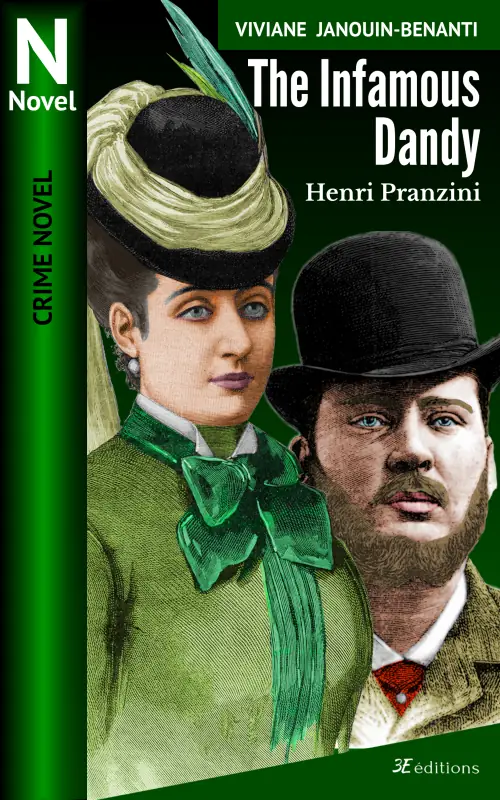


  • The Infamous Dandy

    The Infamous Dandy

    Henri Pranzini

    by Viviane Janouin-Benanti

    Translated by Elizabeth Blood

    Book cover: The Infamous Dandy, Henri Pranzini

    Viviane Janouin-Benanti’s The Infamous Dandy: Henri Pranzini is historical true crime written with the pacing of a novel and the rigor of a case file. It opens in sun-blazed Alexandria in the 1860s and closes, two decades later, at a Paris scaffold at dawn. In between, it braids a cosmopolitan coming-of-age, a slow-motion social climb, and one of the 19th century’s most sensational criminal investigations. The result is an immersive, propulsive portrait of a man who could talk his way into salons, out of scrapes, and—until he couldn’t—around the truth. The book’s power lies in the way it widens the frame: this isn’t only “the Pranzini case,” it’s a panorama of empires, cities, and people caught in his orbit—devotees, dupes, investigators, and a child saint watching from Normandy. The “crime novel from life” that emerges is both highly readable and meticulously sourced.

    What it’s about (without spoiling the turns)

    Viviane Janouin-Benanti begins far from Paris: in Alexandria, where the boy Enrico—soon to rename himself Henri—learns languages and ambition from Selim, an octogenarian guide who once served under Napoleon and stayed in Egypt to build a tourism agency. The early chapters are bright with detail: bustling Sherif Pasha Street; the Nabi Daniel Mosque; Adhoura, a seafood joint where mint tea follows calamari fritters; and a kite hawk hanging in the thermals over the baths while Selim and the boy talk about Mamluks, freedom, and fortunes. The scenes are tactile enough to taste the salt on the plates and on the air.

    Viviane Janouin-Benanti then sets young Henri against capital-H History. He watches the inauguration of the Suez Canal—caravans of crowned heads, orchestras, fireworks—and decides that staying put will never be enough; languages and charm will be his passage. The book is as interested in why he wants to belong as in how he gets in. It’s a savvy choice: the social story becomes the psychological one.

    From there, the narrative tours the British campaigns on the Nile, the anti-slavery push, Cairo salons and Paris boulevards, and the learning of “useful languages” that will make this handsome polyglot a plausible interpreter, art broker, Pullman conductor, or, when he needs to be, a gentleman. The early portrait is of a chameleon with formidable self-belief and one fatal appetite: gambling. Viviane Janouin-Benanti plants that seed early; Selim warns him that gamblers end up “shirtless,” and the book quietly tracks how want twists into necessity.

    In Paris, Viviane Janouin-Benanti surrounds Henri with three women whose roles illuminate different sides of him. There is Antoinette Sabatier, the devoted, older lover who feeds and clothes him and will later, heartbreakingly, try to offer an alibi before telling the truth; the countess Thérèse Tabany, whose exchange of letters with Henri shows how his courtly pen could disarm even a practiced skeptic; and, crucially, Régine de Montille (Marie Régnault), a famed courtesan with an apartment at 17 Rue Montaigne, a maid (Annette Gremeret), and a beloved child, Marie-Louise. Viviane Janouin-Benanti renders their first meeting with cinematic flair—Chopin at the piano, cassis liqueurs, and a tour of the opulent rooms—while letting us see what Henri sees: the jewelry, the safe, the scale of her life.

    The novel’s hinge is the night of March 8–9, 1887. Viviane Janouin-Benanti paces it with dreadful calm: Régine, weary and tipsy, waits for a visitor; the child goes off to bed; and the man who never quite belongs arrives with designs he has already rehearsed. The depiction is neither lurid nor coy; the author trusts the reader to connect what has been foreshadowed with what follows in the papers and the courtroom.

    The investigation that ensues is painstaking and, at times, shockingly modern: a package posted under an alias; the sale of jewelry down south; a self-incriminating “fake letter” that drops telltale linguistic mistakes (calling Régine “Madame Montille” and using the foreign-sounding alterings instead of alterations); and a judge who reads style as evidence. Viviane Janouin-Benanti’s reconstruction of these threads is gripping in its procedural exactitude.

    From the police chiefs (Taylor and Goron) to the examining magistrate (Adolphe Guillot) to the defense (the future star advocate Maître Demange), the cast of officials is large and vividly sketched. The trial itself, presided over by Onfroy de Bréville, plays to a packed, fashion-plate audience until the judge reprimands them: this isn’t theater; a man’s life is at stake. Viviane Janouin-Benanti makes the courtroom feel humid with breath and opinion.

    What happens next is known, but the telling is fresh. The verdict is death; Henri’s “nothing to say” is a whimper after months of bravura; and the book’s final movement begins at 4:45 a.m. with a wake-up in cell no. 2. There’s a chilling efficiency to the way orders are signed, assistants gather, and the blade is readied; an eerie intimacy in Henri thanking a guard for helping with his shoes; and a jolt when he declares, on the steps: “God is great…Woe betide those who do not praise his Holy Name!” Moments later, he pushes away the chaplain but then—this is the line generations remember—kisses the crucifix before the end.

    Viviane Janouin-Benanti doesn’t leave the scene with the crowd. She follows the body to Gentilly, then to the medical school, where a dean weighs organs and a lab assistant takes a cast of the head; it’s unsettling—deliberately so—how quickly a cause célèbre becomes a specimen. In the very next breath, she shows us 14-year-old Thérèse Martin (the future Saint Thérèse of Lisieux) reading La Croix, seeing that kiss reported, and taking it as the “sign” she had begged for in prayer. It’s a stark, unforgettable juxtaposition of the Paris of science and the France of faith.

    How it reads

    Although based on archives of the City of Paris and the Bibliothèque Nationale and anchored by 1887 press accounts, the book is told as a fluid narrative. The translator, Elizabeth Blood, keeps the sentences clear and quick, letting the period detail do the atmosphere-building rather than archaizing the prose. The effect is modern without being anachronistic—ideal for readers who want their history vivid, not dusty.

    Viviane Janouin-Benanti writes with a documentarian’s patience and a novelist’s eye for set piece. The Alexandria chapters glow; the first walk through Régine’s red-papered hallway is heady; the trial scenes crackle with conflicting certainties. She’s especially deft at social x-rays: in a single exchange she can capture why a courtesan would be curious about a well-dressed foreigner and why a gambler would try Chopin first, and conversation after.

    Equally strong is the moral chiaroscuro. Henri’s charm is never in doubt—women write him fan mail even as he awaits execution; guards like him; priests note his composure—but Viviane Janouin-Benanti also lets us near that chill of self-justification. On the train south, after the crime, his mind flickers through rationalizations with clinical calm. It’s a difficult passage to read because it feels true to the psychology the book has built.

    The themes that linger

    Belonging and performance. From the moment he resolves to drop “Enrico” for “Henri,” the hero (or anti-hero) is acting toward an audience—tourists, officers, lovers, judges. The novel suggests that social performance can be a ladder and a trap: the same fluency that opens doors can blur the self until only appetite remains. The letters to the countess are case studies in seduction by ink; the “fake letter” planted at a crime scene curdles that skill into evidence.

    Empire and circulation. This is a story of a man in motion—Egypt, India, Afghanistan, Paris, Marseille—and of goods and people that move with him: diamonds, banknotes, love notes, rumors. The Suez Canal opening is more than a spectacular episode; it’s the infrastructure beneath the plot, the world becoming traversable for someone like Henri. The book’s photo album underlines this, with images from Alexandria, the canal, British expeditions, Paris snow, even the hotels and streets where crucial meetings occur.

    Faith, science, and the appetite for spectacle. A Saint’s prayer, a judge’s summation, a public that treats the courtroom like a premiere, and a dean weighing a notorious brain—Viviane Janouin-Benanti trusts readers to notice how late-century France kept both relic and report, both crucifix and calipers, within reach. The kiss on the crucifix, read by Thérèse as grace, is placed beside the autopsy ledger; their coexistence is the point.

    Women’s peril and agency. Régine’s resources can’t keep danger from stepping through her door; Annette’s loyalty and Marie-Louise’s innocence are the book’s ache. Yet it’s also women who show the clearest moral spines: Antoinette revises her statement and refuses to perjure herself, at cost to her own heart; Thérèse insists that even the worst sinner must be prayed for.

    Standout scenes and details

    • The tour of 17 Rue Montaigne. It’s the novel in miniature: wealth as theater, charm as access, music as mask. The spread of “fashionable books,” the bell summoning Annette, the Chopin waltz—each detail doubles as a clue to how Henri works a room.
    • The sleuthing around the letter. Few true-crime reconstructions make linguistic nuance feel so damning. “Madame Montille” instead of “de Montille,” alterings instead of alterations: a fingerprint of syntax.
    • The posting of the package. A clerk’s register, a weight (475 grams), a false sender (“Dr. Forster”), and the small clink that convinces the postman he’s hearing “instruments”—a whole plot in a few desk-level gestures.
    • The theater of the trial. The judge’s warning against opera glasses; the defendant’s fixed calm; the women spectators “dressed to the hilt” as if for opening night—Viviane Janouin-Benanti has an archivist’s ear for quotes and an eye for crowd behavior.
    • The dawn at La Roquette. The quotation marks are sparse here and that’s exactly right; ceremony, bureaucracy, and bravado collide in a few clipped minutes. Then the hush after the blade and the ordinary business of wagons and paperwork.

    What the book is (and isn’t)

    This is not a whodunit with a late twist; it’s a how-was-this-possible and a what-did-it-mean—meticulous narrative nonfiction that reads like a novel. Viviane Janouin-Benanti surveys the record (there’s a compact bibliography; the periodicals are named; the archives are cited), but she’s uninterested in pretending the 1887 press was neutral. She gives you the chatter and the evidence, the courtroom and the backstairs, and she allows herself psychological inferences where the documents invite them. The tone is compassionate without being credulous.

    Elizabeth Blood’s translation lets the voices hum at their natural register: Selim’s warm pedagogy in Alexandria; Antoinette’s plainspoken devotion; the judge’s studied severity; Henri’s ingratiating grace. You never feel the translator reaching for verbal antique shop props; the English is clean, contemporary, and swift.

    Physically, the book helps you visualize what you’ve read. After nine parts (I–IX), there’s a photo album—camels in Alexandria, the Nabi Daniel Mosque, the canal under construction, Pranzini in uniform, the Hôtel Continental across from the Tuileries, 1887 Paris in snow, portraits of Henri and Régine, and maps of the British expeditions he joined. It feels like you step from the vellum of the story into its sepia.

    Why you might love it

    • You want true crime with context. If you’re tired of podcasts that reduce tragedies to “beats,” you’ll appreciate how this book restores social and historical complexity—from Alexandria’s mixed neighborhoods to the rituals of Parisian high life to the machinery of the Third Republic.
    • You like courtroom dramas that are really character dramas. The spectacle is here, yes, but what lasts are the moral choices: Antoinette’s reversal; Guillot’s summing-up; Henri’s last-minute gesture; Thérèse’s stubborn, teenage hope.
    • You’re a sucker for richly drawn places. Alexandria, Suez, Paris: Viviane Janouin-Benanti writes rooms you can smell and streets you can hear. The book is a travelogue of temptation.

    A couple of caveats (more like content notes)

    The book faithfully depicts violence and its aftermath—never gratuitously, but honestly. The brief, clinical account of the autopsy and the era’s macabre “souvenirs” may unsettle some readers; it’s meant to. Likewise the quiet, devastating domestic scenes before the crime. If you prefer your historicals sanitized, this isn’t that.

    The verdict

    The Infamous Dandy is that rare true-crime narrative that refuses to flatten its subjects into monsters and martyrs. Viviane Janouin-Benanti gives us a seducer who could play Chopin and play people; a courtesan who could command a room and still be fatally vulnerable; an ordinary woman whose truth-telling costs her the only man she loved; a teenage girl whose prayer life intersects with a Paris execution at five in the morning. By the end, the “case” has become a study in the performances people give—to others, to the court, to God, to themselves—and the moment those performances fail. If you like your history tense, humane, and alive to contradiction, this is a book to clear a weekend for. And when you finish the last page, don’t skip the album: seeing Alexandria’s camels lined up for tourists—just as Selim once did—will make the opening chapters echo in a newly tender key.


    Where to buy the book:

    Amazon

    Price: $28.00

    Price: $18.00

    Price: $4.99


    Apple-Books

    Price: $4.99


    Kobo

    Price: $4.99


    Google Books

    Price: $4.99

  • Killer Doctors

    Killer Doctors

    The True Crimes of Dr. Petiot
    & Other Murderous Physicians

    by Serge Janouin-Benanti

    Translated by Eva N. Siskowski Boatwright

    Book cover: Killer Doctors, The True Crimes of Dr. Petiot and Other Murderous Physicians

    Here’s a book that does something sly and satisfying with true crime: it wraps thirteen meticulously retold cases of murderous physicians inside a taut prison-cell drama, turning history into a series of midnight confessions. Serge Janouin-Benanti’s Killer Doctors, The True Crimes of Dr. Petiot & Other Murderous Physicians isn’t a thriller, these are true stories, but it reads like one, anchored by a dialogue between guard and prisoner that frames every case, sharpens the stakes, and keeps you turning pages to the very end. The author’s conceit (and the book’s big payoff) is to let one infamous doctor, Marcel Petiot, “teach” his night guard, Pierre, about other doctors who killed. The result feels, as one early notice aptly put it, like a dark, Arabian Nights for true crime: each night, another tale unfolds, and each tale refracts Petiot’s shifting self-portrait.

    What it’s about (and why it works)

    The frame opens in La Santé Prison in 1946. A young guard, Pierre, takes over the night shift watching Petiot, the notorious Parisian physician on death row. Their first exchanges are terse, sparring, and electric. Petiot sizes up Pierre, nicknaming him “little sparrow,” and the guard, rattled but dutiful, tries to keep the upper hand. That intimate, claustrophobic setting  -two men, bars between them, hours to kill- becomes the crucible for the book’s thirteen case studies. Each study is “told” by Petiot, as if he can prove that he, a doctor, cannot be the aberration Pierre believes, because physicians have always been capable of murder.

    It’s a brilliant structural choice. Stories arrive as staged lessons, and they’re titled with avian proverbs and metaphors (“The Sparrow and the Eagle Owl,” “The Jay Dressed Up in Peacock Feathers,” “Happy as a Lark”), creating a chorus of fables whose morals are anything but simple. The table of contents reads like a gruesome cabinet of curiosities: Edmond Couty de La Pommerais (insurance, poison, and audacity); Hawley Harvey Crippen (domestic horror dressed in respectability); William Palmer and Théodore Durrant; Castaing; Bougrat; Gorguloff; the Jack the Ripper doctors (Cream and Klosowski); and H. H. Holmes’s “Murder Castle,” among others, braided with recurring chapters on Petiot himself.

    Serge Janouin-Benanti gives the book heft by interleaving Petiot’s own arc -arrest, trial, grandstanding, eerie calm- with the guard’s mounting dread and fascination. The frame propels us inexorably to dawn and the guillotine (Petiot is executed at 5:05 a.m.), but the path to that final page is crowded with ghosts from medical history who make his case (and our judgment) anything but straightforward.

    A tour through the cases

    If you read only one chapter to test what the book can do, make it “The Jay Dressed Up in Peacock Feathers,” on Dr. Edmond Couty de La Pommerais. Petiot recounts, with unnerving relish, how this Parisian doctor engineered a life-insurance scam using an ex-mistress as the insured, and how she died via the “perfect” poison: digitalis. Digitalis leaves no chemical fingerprint, Petiot explains: unless you think like Ambroise Tardieu, the forensic dean who turned to physiology when chemistry failed, using living hearts (dogs, frogs, rabbits) to prove the poison’s effect by the telltale slowing and stoppage of the pulse. The way the author reconstructs that courtroom duel feels almost novelistic: hypothesis, counter-hypothesis, grisly experiments, and finally, the jury’s turn. It’s a forensic procedural staged in miniature, and it lands with a thud.

    The book is full of such explanatory set-pieces, and they’re both chilling and strangely clarifying. La Pommerais instructs a mistress to fake a stairway fall and “collect” diagnoses from top Paris specialists; he hoards a homeopath’s bounty of pure toxins; he counts on digitalis’s undetectability in the autopsy room. The author lets Petiot explain how and why these choices worked, until Tardieu dismantles them. The methodical walk-through (including the recovered vomit between floorboards, sterilized and tested in animals) is as unforgettable as it is macabre.

    Jump continents and decades, and you arrive at “The Murder Castle.” The way Serge Janouin-Benanti renders H. H. Holmes is a study in horror’s architecture. Holmes builds a corner-lot hotel ahead of the Chicago World’s Fair, a labyrinth with secret corridors, two-way mirrors, gas lines routed into rooms, chutes, and a basement outfitted with a furnace, quicklime pit, surgical tables, and a vat of acid. The chapter’s imagery is ghastly, but controlled; you see the machine and the man. And the narrative never loses its anchor: we’re still in La Santé, still listening to Petiot draw lessons from someone else’s monstrosity.

    The “Jack the Ripper” chapter is more speculative but no less gripping. Petiot sifts rival suspects with a doctor’s eye for anatomy and technique, weighing the case against Thomas Neill Cream, the “Lambeth Poisoner,” hanged in 1892, whose alleged last words (“I am Jack…”) turned him into a perennial suspect, and then turning, more persuasively, to Severin Klosowski (a barber-surgeon trained in Warsaw, later executed as wife-poisoner George Chapman). It’s a deft demonstration of the book’s method: sift rumor, test plausibility, and force the reader to think like an investigator.

    The selection is eclectic in the best way. You get domestic poisoners and opportunists (Palmer, Castaing), political assassins (Paul Gorguloff), and colleagues killing colleagues. The timeline stretches across centuries and countries, but the chapters never sprawl; each is shaped to an argument and a mood, and each returns us to Pierre and Petiot, whose nightly debates are the drumbeat under it all.

    Petiot as narrator: charisma, cruelty, and the “sport” of killing

    Let’s be clear: the most unsettling pleasure of this book is being trapped with Petiot long enough to hear him at length. He is manipulative, erudite, and often very funny, in ways that make your stomach drop. He brags about his memory, claims to read 150 pages an hour, delights in chess-like “martingales” for life and death, and is forever testing Pierre’s gullibility. He insists the doctors he killed were “bastards,” that he’s a patriot, and that the justice system botched even its counting: “Not 26… I admitted to 63,” he crows, even as he shifts the terms of his own confessions. Serge Janouin-Benanti doesn’t sanitize any of that; he lets the contradictions accrue until they clang.

    Along the way, Petiot drops aphorisms (and epigraphs) from his prison-written tract Chance Conquered, and the author sprinkles those at the openings of chapters like poisoned bonbons. They sharpen the theme that runs through the whole book: games of chance, games of power, and the fatal allure of believing you can outwit rules, systems, even death. That theme peaks late when Petiot, facing the end, still taunts, still performs, and still treats murder like a contest played for “sport.” Serge Janouin-Benanti stages that bravado against the starkness of the wake-up call, the corridor walk, and the blade. The tension, between swagger and silence, makes the last chapter a punch in the gut.

    How it’s told: pacing, texture, and a translator’s touch

    Two things make these tales feel fresh even if you think you know the case names.

    First, the pacing. Each chapter is a tight braid of storytelling and explanation. The author knows when to dwell on a forensic wrinkle (Tardieu’s “living heart” insight), when to sketch a setting (Holmes’s castle rooms with their concealed valves and chutes), and when to cut back to Pierre, whose discomfort is a moral compass the book never loses. That rhythm keeps the pages moving without ever cheapening the material.

    Second, the texture. The book includes historical photographs and visual plates (anthropometric images of Petiot after his arrest; a spread on Holmes’s hotel and victims) that punctuate the text without turning it into a scrapbook. They’re carefully placed, and they deepen the sense that you’re not just being told about these crimes, you’re being shown their human scale.

    A word on the translation: Eva N. Siskowski Boatwright renders Serge Janouin-Benanti’s French into English with clean, idiomatic snap. She preserves Petiot’s needling tone and the author’s precise, almost playful chapter headings, while keeping the forensic passages crisp. The result reads smoothly for a broad audience, no jargon choke points, no over-literalisms, and still carries the French flavor of the frame. (The book is published by 3E éditions; this English edition is © 2023, ISBN 978-2-37885-072-2.)

    Themes that linger

    By filtering thirteen cases through Petiot’s voice, the book asks you to sit with three discomforts:

    • The double edge of medical authority. Doctors command trust, carry specialized knowledge, and have access to tools: an unbeatable advantage if they choose to harm. Again and again, Serge Janouin-Benanti shows how that trust becomes the weapon: the neat signature on a death certificate, the prescription no one questions, the bedside presence that disarms suspicion. The author doesn’t sensationalize that; he anatomizes it.
    • Forensics as a moral drama. Tardieu’s digitalis breakthrough is science but it reads like theatre: the wrongdoer banking on “undetectable” poison, the expert flipping the problem on its head, the courtroom as stage. The book returns to this pattern, where reasoned method brings order to cruelty, often enough that it becomes a quiet counter-argument to fatalism.
    • Myth-making and the press. Petiot needles Pierre about what newspapers printed about him during and after the Occupation; chapters like Jack the Ripper and Holmes trace how rumor, headlines, and spectacle inflate villains into legends. The book is honest about the allure of those legends and about the damage they do.

    Who will love this

    If you enjoy narrative nonfiction that reads with the urgency of a thriller, you’re in the target zone. Killer Doctors is ideal for readers drawn to forensic history, courtroom strategy, and psychological portraiture. It’s also unusually good for people who think they “don’t read true crime”: the frame story gives the book a novel’s shape, and Pierre’s skepticism gives you a way in even if your first instinct is to recoil.

    Be warned: the content is dark. Some passages (especially on Holmes’s methods and certain Ripper details) are disturbing, though the prose never wallows. The author’s restraint -describing just enough, then stepping back- earns trust.

    Bottom line

    Serge Janouin-Benanti has built a cunning structure out of real horrors: a death-row Socratic seminar in which a killer physician lectures us through a gallery of his kind. It’s propulsive, grimly witty, and uncommonly illuminating about how murders by doctors get planned, executed, covered up, and, sometimes, solved by ingenuity as sly as the crime. By the time the final walk to the guillotine begins, you’ve heard enough to know that Petiot’s insistence on being exceptional is a dodge, and that the exception has a history as long as medicine itself. You don’t need to excuse him to be fascinated by how he thinks; the book counts on that tension and uses it.

    Read it for the cases. Read it for the forensic ingenuity. Read it for the portrait of a manipulator who, even at the end, tries to turn murder into a game, and for the guard who refuses to become his pawn. And if you’re the kind of reader who likes a sly structural flourish, savour the avian titles and the recurring epigraphs from “Chance Conquered”: they’re the flutter of wings you hear before each trap springs. These “cruel tales,” inspired by true events, earn their shiver.

    Credits and edition info: translated by Eva N. Siskowski Boatwright; 3E éditions, 2023; Collection “Cruel Tales”; ISBN 978-2-37885-072-2. Photos and plates include Petiot’s anthropometric shots and spreads on Holmes’s hotel; the table of contents lists thirteen doctor cases interleaved with Petiot chapters.


    Where to buy the book:

    Amazon

    Price: $26.00

    Price: $16.50

    Price: $4.99


    Apple-Books

    Price: $4.99


    Kobo

    Price: $4.99


    Google Books

    Price: $4.99