Category: Crime Novels

  • The Paris Train Killer

    The Paris Train Killer

    A French True Crime Thriller

    by Viviane Janouin-Benanti

    Translated by Elizabeth Blood

    Book cover: The Paris Train Killer, A French True Crime Thriller

    Viviane Janouin-Benanti’s The Paris Train Killer – A French True Crime Thriller is one of those books that quietly pulls you into a very specific time and place and then refuses to let go. Set under the Second Empire of Napoléon III and based entirely on a real case, it blends police procedural, social history, and psychological portrait of a rising modern criminal. The result is a thriller that feels immersive and oddly intimate: you’re not just watching a manhunt, you’re watching a country grapple with the dangers of its brand-new railways and the limits of its own justice system.

    The novel opens with a striking image straight out of a nineteenth-century newspaper: in September 1860, a railway crossing keeper and his family in rural Alsace find a well-dressed stranger lying motionless on the tracks of the Paris–Mulhouse line. He’s heavy, expensively shod, apparently dead… until he suddenly opens his eyes. He cannot move, he doesn’t speak, and he carries no papers. He is, quite literally, a mystery man dumped on the rails.

    From that moment, the book follows Police Commissioner Élie Singer, a widowed, thoughtful investigator recently assigned to Mulhouse. Singer quickly realizes that the injured man didn’t just fall; he was attacked and thrown from a first-class compartment, his valuables stolen, his money pouch ripped from around his neck, leaving a tell-tale mark. The man himself is strangely placid and uncooperative – he appears to understand French but refuses to speak, crying silently rather than answering questions. Is he a bewildered victim? A spy? A dangerous conspirator?

    A double mystery on the rails

    The first third of the book is essentially a locked-room mystery stretched across a moving train. Singer and an investigating judge, Amaury Violet, try to reconstruct what happened between the frontier town of Belfort and Mulhouse. They locate a sealed first-class compartment, examine the curtains and seats, and hunt for a missing suitcase. The only promising lead is a program for a prestigious international medical convention in Paris and a few hints about Russian rail engineers and doctors.

    Singer boards the Paris express himself to trace the victim’s path, interviewing train crews and passengers at the Gare de l’Est, questioning the station chief who refuses to admit anything could be wrong “on his line,” and chasing down witnesses who vaguely remember a short, elderly man in a lavish coat accompanied by someone younger. These chapters have a wonderful, old-fashioned detective-story charm: a lot of legwork, endless station coffee, questioning people who are sure nothing ever happens on “their” trains.

    The breakthrough comes when Singer discovers that the injured man is actually Professor Heppi, a Russian military surgeon and hospital director, who was supposed to deliver the opening talk at the Paris convention. A younger colleague, Dr. Tadieff, confirms his identity… but the professor himself remains mentally fogged, unable or unwilling to recognize anyone. His head trauma has left him with severe amnesia. He happily eats the mulled dishes cooked by Singer’s landlady, but cannot recall who attacked him or why.

    This is one of the book’s most unsettling threads: the key witness is right there, polite and docile at Singer’s table, yet emotionally absent. He survives, and eventually leaves France escorted by Tadieff, but he cannot help the investigation at all. The case stubbornly refuses to fit into any neat political or personal motive.

    From attempted murder to assassination

    Just when the reader thinks the book might “only” be about a single failed attack, Viviane Janouin-Benanti shifts gears. A few months later, on the same Paris–Mulhouse line, another solitary traveler in first class is assaulted – this time with chilling efficiency. When the express reaches Paris’s Gare de l’Est, the conductors discover that one berth’s occupant is dead: shot twice in the head and once in the chest while he slept, then left to be rocked gently by the motion of the train.

    The victim is no anonymous foreigner. His luggage reveals that he is Judge Poinsot, the powerful presiding judge of an imperial court chamber in Paris. His murder hits like a thunderclap: the press erupts, the judiciary is outraged, and the police are suddenly under enormous pressure. A crime on the rails was bad enough; an assassination of a senior magistrate is almost unthinkable.

    At this point the narrative splits geographically and intellectually. In Paris, Commissioner Louis Chauffette leans toward a political explanation: Poinsot had sent many radical republicans and activists to prison, and these were years when bomb plots and assassination attempts against Napoléon III were frighteningly frequent. The book carefully sets out this background, from elaborate failed bombings of imperial trains to Felice Orsini’s horrific attack outside the Opéra, in which dozens died but the imperial couple survived. The idea that a judge might be targeted in retaliation seems entirely plausible.

    Singer, however, sees something else. For him, the key link is the railway itself. Months earlier on that same line, an unknown attacker observed a wealthy man traveling alone, moved between cars while the train was in motion, struck with a prepared weapon, robbed him efficiently, and pushed him to his death – only chance and a crossing keeper’s vigilance kept Heppi alive.

    Now another solitary, affluent traveler on the same line has been attacked, this time with a gun. The method has evolved, but the pattern feels the same. Singer becomes convinced that the attempted murder of Professor Heppi and the assassination of Judge Poinsot are the work of one and the same predator: the man newspapers will christen “the Paris train killer.”

    A good portion of the book’s middle follows Singer as he tries to prove that link, while Chauffette clings to his political theory. Their professional rivalry is subtle but very human: two intelligent men, each sure his angle on the case is the right one.

    The birth of a modern manhunt

    The second half of the novel becomes a relentless pursuit narrative as Singer painstakingly builds his suspect: a young Alsatian named Charles Jud. Through witness statements, hotel records, and tiny overlooked clues—a forgotten coat, a mislaid blanket, a whiff of perfume—Singer pieces together the movements of a man who moved easily between second-class and first-class carriages, could climb outside along a moving train, and knew how to pick out vulnerable, well-off targets.

    Jud is no romantic outlaw; the text emphasizes his status as a deserter previously sentenced in absentia for aggravated theft. He comes from an unremarkable but respectable family in Alsace; the “bad seed” who grew out of a hardworking household. The Ministry of the Interior’s wanted notice—which the book reproduces in facsimile in a “photo album” chapter at the end—describes him in clinical detail: height, eye color, scar on his forehead, penchant for disguises, even his habit of sometimes wearing green glasses and heavy beards. The documentary flavor of these pages gives the reader the eerie feeling of looking at the real file of a real killer.

    The investigation takes Singer from small Alsatian towns to Paris, then down through Troyes, Marseille, and Lyon, and finally across into Switzerland. He tracks Jud via hotel registers – the Hôtel du Mulet, the Hôtel du Vaucluse, a brothel in Geneva where a Frenchman paid with a Russian gold coin suspected to have belonged to Heppi. Each time, the police arrive just after Jud has moved on.

    One of the most sinister threads is the killer’s obsession with perfume. Letters signed “Master of All” arrive at the prosecutor’s office and at Singer’s home, mockingly dissecting the investigators’ efforts, praising the genius of the “Paris train killer,” and taunting Singer as forever being ten steps behind. The paper is scented with roses. Later, Singer uncovers that in an earlier case Judge Poinsot had acquitted a suspect he described in his notes as smelling of roses. That suspect, Singer realizes, was almost certainly Jud under another identity.

    This interweaving of archival-style documents (letters, court files, ministerial notices) with the fictionalized narrative gives the book a powerful authenticity. You’re constantly reminded that, however novelistic the dialogue, these are real crimes that unfolded across real train lines, in real stations whose photographs appear in the closing pages: the old Mulhouse station, the Gare de l’Est, the very places Singer stalks with his cane and his notebook.

    A detective haunted by failure

    One of the surprises of The Paris Train Killer is that its heart isn’t only in the crimes; it’s in Élie Singer himself. He’s no flamboyant genius detective, but a solid, intelligent, sometimes self-doubting professional. We learn that he is a widower, still mourning the wife and child he lost in an accident ten years earlier; the quiet emptiness of his little Mulhouse apartment makes him oddly eager to bring the injured stranger home and “observe” him, as if filling an emotional void as well as doing his job.

    As the case stretches over months, Singer’s limp worsens, mirroring the emotional toll of chasing a killer who always stays ahead. There’s a poignant contrast between his dogged, methodical work—trudging out to tiny stations on freezing winter nights, sharing hot drinks with railway workers, re-reading stacks of letters from the public—and the mocking, omniscient tone of the “Master of All” letters that belittle him as just another cog in a limited police machine.

    Viviane Janouin-Benanti doesn’t glamorize the police; she’s frank about their blind spots, conflicts, and bureaucratic limits. But she allows Singer a quiet dignity. Even in defeat, when Jud manages a daring escape from a provincial jail and later vanishes overseas, Singer keeps working. The novel’s final chapters make it very clear that this will remain the one unsolved case of his career, a wound that never quite heals. A later trial in Paris condemns Jud to death in absentia, but the man himself is already across the Atlantic, sending New Year’s greetings from America in the form of a mocking photograph of a woman who looks suspiciously like him.

    That choice—to follow the factual, unresolved trajectory of the real case instead of inventing a neat capture or melodramatic showdown—is one of the book’s strengths. It leaves you with the same uneasy dissatisfaction that must have haunted the real investigators.

    Trains, terror, and the birth of modern fear

    Beyond the manhunt, The Paris Train Killer is also a portrait of an era when the railroad was both marvel and menace. The book dwells on small practical details: the crossing keepers who inspect the line by lantern light before the emperor’s train passes; the cramped, gas-lit rural stations where a single employee changes signals by hand in the freezing night; the way first-class compartments with their velvet curtains create both comfort and dangerous privacy.

    Viviane Janouin-Benanti situates Jud’s crimes in a broader climate of political paranoia and technological change. Bomb plots target imperial trains; secret societies scheme from abroad; the government responds with sweeping security laws that allow detention and deportation without trial. The trains are lifelines of modernity—and also perfect stages for invisible violence, where a killer can slip away at a small station, leaving a victim to be discovered hours later at a major terminal.

    All of this is presented in accessible language, without requiring the reader to know anything about French history. The historical context is explained clearly and woven into Singer’s own backstory: he was promoted partly thanks to his role in counter-terrorism investigations, so his first instinct is to see the Russian victim as a possible agent or conspirator. The book invites you to watch him test and discard theories as the case gradually narrows from “maybe a terrorist plot” to “a very modern, very personal form of criminal predation.”

    At the end, the “photo album” section gathers some of the real documents that inspired the novel: a map of the Paris–Mulhouse route, photos of stations, an image of Jud himself, and a translation of the Ministry of the Interior fugitive notice. That closing cluster of images underlines that you’ve just read fiction, but the bones beneath it are archival fact.

    Style, structure, and the translation

    Structurally, the book moves in short, focused chapters that often end on small cliffhangers: a witness trailing off, a new letter arriving, a line of inquiry opening or collapsing. It alternates between Singer’s investigative work, scenes that follow the killer’s actions in the third person, and sections that zoom out to describe the political climate, the justice system, or the letters pouring in from cranks and obsessives who claim responsibility.

    Elizabeth Blood’s translation keeps the tone nimble and readable. There’s a faintly old-world flavor to some descriptions—fitting for a story set in the 1860s—but the dialogue feels natural and contemporary. Singer’s dry humor, the bluster of station chiefs, and the judge’s alternating pomposity and exasperation all come through cleanly.

    Stylistically, Viviane Janouin-Benanti’s great skill lies in balance. She gives us procedural detail—how reports are filed, how autopsies are ordered, how letters are catalogued—but never lets the narrative get bogged down in trivia. She sketches characters quickly but with enough specificity that you remember them: the stubborn station chief who insists his line has “never had a single incident,” the talkative conductor who gossips about local crimes over drinks with Singer, the icy, ambitious Dr. Tadieff.

    The violence, when it appears, is brief but vivid. The attack on Heppi with a rock wrapped in cloth, the quiet savagery of the judge being shot in his sleep—these moments are described in clear, unsensational terms, which paradoxically makes them more chilling.

    Why this book is worth your time

    If you enjoy true crime, historical mysteries, or procedural novels that respect your intelligence, The Paris Train Killer offers a lot to savor:

    • A gripping double case that begins as an enigmatic attempted murder and escalates into the assassination of a high-profile judge, both tied together by the same eerie train line.
    • A compelling investigator in Élie Singer, whose quiet persistence and personal grief give emotional weight to the chase.
    • A richly evoked setting, from rural Alsace crossing huts to the bustling Gare de l’Est, set against the background of Napoléon III’s fragile, authoritarian regime.
    • A disturbing portrait of an early “modern” criminal, a young man who uses disguises, mobility, and the anonymity of trains to turn robbery into near-perfect, almost recreational violence.
    • A strong sense of reality, bolstered by the incorporation of actual documents and the refusal to tidy the messiness of real history into a conventional happy ending.

    This isn’t a whodunit where you sit with a checklist and try to guess the culprit from a list of suspects in a country house. From fairly early on, the reader knows—or strongly suspects—who the killer is. The suspense lies instead in whether Singer and his colleagues can prove it, and whether the machinery of mid-nineteenth-century justice can possibly catch up with a criminal who uses the very latest technology, the railway, to stay permanently in motion.

    Viviane Janouin-Benanti doesn’t promise comforting answers. What she delivers is something arguably richer: the feeling of having lived inside a real historical case, with all its blind alleys, moral ambiguities, and lingering regrets. When you turn the last page and see Charles Jud’s actual photograph reproduced, following pages of fiction that made him horrifically vivid, it’s hard not to feel a little chill. In short, The Paris Train Killer – A French True Crime Thriller is both an engrossing read and a fascinating window into the birth of modern fear: fear of strangers on trains, of random violence, of killers who slip away into crowds and across borders. If that mix of atmosphere, history, and investigative drama appeals to you, this book is very much worth taking a journey with—preferably from the safety of your armchair, rather than a lonely first-class compartment at night.


    Where to buy the book:

    Amazon

    Price: $22.00

    Price: $13.00

    Price: $4.99

  • Poison Flowers

    Poison Flowers

    A Bordeaux Housewife’s Murderous Secret

    by Viviane Janouin-Benanti

    Translated by Elizabeth Blood

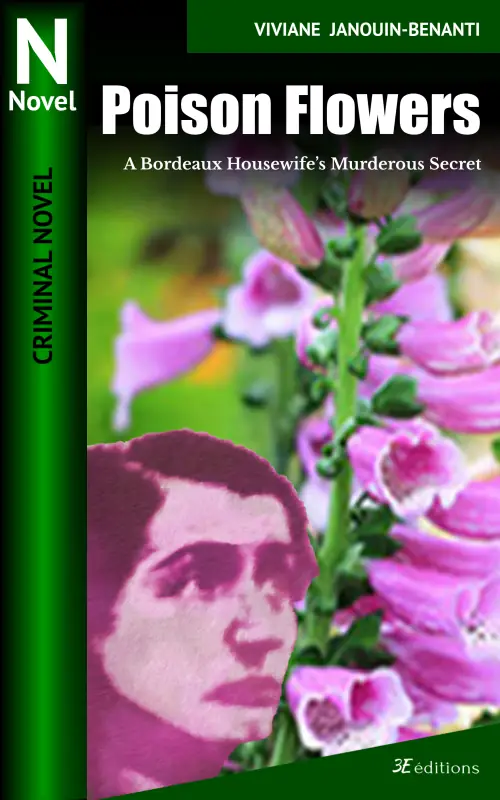
    Book cover: Poisons Flowers, A Bordeaux Housewife's Murderous Secret

    Here’s a crime novel that blooms slowly—and lethally. Set in interwar Bordeaux and built from a true case, Poison Flowers: A Bordeaux Housewife’s Murderous Secret follows Gabrielle Mairiné, a well-liked café keeper, attentive mother, and—eventually—the quiet architect of two near-perfect murders. Viviane Janouin-Benanti’s book (in Elizabeth Blood’s supple English translation) takes its time, steeping you in politics, daily routines, and family resentments until a cup of anise tea becomes the most terrifying object in the room. The result is a richly atmospheric, morally provocative read that fans of historical fiction and true crime will devour. (It’s explicitly “based on true events,” with names changed to protect descendants. )

    The hook: a housewife, a city, and a poison that leaves almost no trace

    Gabrielle’s story begins in 1922, at a wedding that already feels like an argument. She marries Laurent, a devoted socialist and railroad worker, despite her bourgeois mother Adèle’s disdain for his modest means. The family is still vibrating with the aftershocks of World War I—her father, André, is a shell of himself, drifting between silence and fevered recollection, the Spanish flu having only deepened the psychic crater the trenches left behind.

    Bordeaux itself becomes a character: the Saint-Michel spire looming over Rue des Faures, the Pont de Pierre tying riverbanks together, the little café at 85 Rue des Faures where Gabrielle pours wine, gossip, and cheer. The book’s photo album grounds the fiction in place—there’s even a snapshot of the café’s exact site—reminding you this isn’t just an author’s invention.

    Viviane Janouin-Benanti stitches Gabrielle’s private life to the public mood: postwar politics (Jaurès’s assassination, Blum’s rise), socialist meetings, and the noisy, hopeful talk of progress that thrums through her wedding feast. But the seeds of the novel’s title are planted earlier and deeper. As a teenager, Gabrielle becomes fascinated by poisons—first in a school lesson about the autumn crocus (colchicine) and, chillingly, in a front-row seat at the sensational trial of Marie Lasvand, accused of poisoning her husband with Fowler’s solution (arsenic). That fascination becomes a reading habit. Years later she devours press coverage of Violette Nozière—the young Parisian who poisoned her parents and whose sentence was eventually softened—absorbing a dangerous lesson about public sympathy and female offenders.

    The book’s central irony is that Gabrielle is neither an ideologue nor a melodramatic femme fatale. She’s practical, secretive, a “good girl” who craves freedom more than romance. The author renders her interiority with unnerving calm: a woman who watches, learns, and then acts.

    The crimes (and why they work so disturbingly well on the page)

    Two things turn this quiet Bordeaux life toxic: knowledge and opportunity. From a pharmacy assistant lover, Gabrielle borrows a toxicology manual and studies it like scripture. She learns what a pathologist might find—and just as crucially, what he won’t. Her eye falls on digitalis, a cardiac glycoside derived from foxglove: slow-acting, insidious, hard to detect in a corpse unless the dose is massive. It won’t linger in the liver or kidneys; to catch it, a doctor would need the victim’s vomit while they’re still alive.

    By the time Gabrielle meets Abdous Amar, a charismatic soldier, the chance to use that knowledge arrives. When Adèle discovers the affair and gives her daughter seven days to end it—or she’ll tell Laurent—Gabrielle makes a decision that’s as methodical as it is monstrous. She settles on a delivery system that feels maternal and harmless: anise tea, served in loving doses that hide the bitter medicine.

    Adèle dies. It looks natural. A harried doctor signs the certificate. Gabrielle’s calculation is proved correct: no one suspects digitalis, and no one was called while the vomiting might have betrayed it. Only a neighbor’s curiosity and Abdous’s subsequent blackmail (he extracts a savings book and 45,000 francs in equities) hint at the rot beneath the surface. The confrontation leads to Abdous’s arrest—but when he returns the money, the charges are dropped, and Gabrielle slips free again.

    Enter lover number two: Édouard Camou, a manipulative boarder who installs himself not just in the spare room above the café but in Gabrielle’s bed and plans. Soon, Laurent—honest, hardworking, and too often away on the railroad—falls violently ill. He vomits incessantly, and when his mother tries to take him away he reportedly begs, “Maman, get me out of here. She’s poisoning me.” No doctor is summoned until after he dies; a polite physician notes how the bedroom smelled of lavender and looked so peaceful that he accepted the widow’s “heart attack” narrative at face value.

    This is where Viviane Janouin-Benanti’s craft bites. She never sensationalizes the killings. Instead she puts us at kitchen-table height, in the ordinary light of afternoon, where love curdles into convenience and a teacup turns lethal. The horror is domestic. The method—patient, “invisible,” almost bureaucratic—feels truer, and uglier, than a spree of spectacular violence.

    The investigation and trial: a true-crime engine that hums quietly

    An anonymous letter finally jolts the police: a tip about the “happy widow” who’s celebrating with her lover and a death that looked like poisoning, not fate. The Chief arrests Gabrielle and Camou while they’re still laughing in each other’s arms. (She’s sent to Bordeaux’s Fort du Hâ prison, whose forbidding silhouette appears in the book’s photo album.)

    The courtroom sections are among the most gripping—and most maddening. Witnesses line up to praise Laurent as “the best of men” and to denounce Gabrielle’s adultery, a moral register the prosecutor smartly plays. More damning are the medical and forensic testimonies: the pathologist explains why digitalis is nearly impossible to confirm post-mortem; the family doctor admits he was exhausted and simply didn’t imagine poisoning; another physician describes the lavender-scented room and his own credulousness.

    The prosecutor’s summation is devastating in its cold logic. Two deaths, both by the same careful method; two refusals to call a doctor during the crucial hours when vomit could be tested; two cups of that “hideous anise tea.” He argues that Gabrielle didn’t kill for money or escape but “for pleasure”—a chilling claim that the narrative never answers definitively but that lingers like a bitter aftertaste.

    The defense counters with victimhood and coercion. Gabrielle casts the men around her—Abdous and Camou—as puppet-masters who pushed her into murder; she even invokes Violette Nozière as a precedent for clemency. But Abdous—respectful, even wounded—insists “she’s the one who wanted to kill,” and his testimony about anise tea and “little pills” doesn’t help.

    A verdict is inevitable. Gabrielle is sentenced to death; Camou and Amar receive twenty years each. She is guillotined on January 8, 1941—in wartime, under a gray sky of rationing and fear. The book records her last, baffled attempt to treat the moment as a monetary inconvenience (“Go to the clerk’s office—that’s where all my money is”), and her ferocious struggle when she understands where she’s actually going.

    Why it works: character, context, and a poisoner’s cool precision

    Viviane Janouin-Benanti writes in a clean, reportorial line—but she’s sly about how she layers it. Each early page that seems purely historical turns out to be plot. The chemistry lesson on autumn crocus foreshadows a mind learning that beauty can be lethal. The Lasvand and Nozière cases don’t decorate the background; they shape Gabrielle’s imagination of what’s possible and what she might get away with. Even reading Mauriac’s Thérèse Desqueyroux becomes an accelerant: Gabrielle treats the novel’s dismissed charges as confirmation that she’s chosen the right poison and the right era to use it.

    The book’s other strength is its moral ambiguity. It’s easy to loathe Gabrielle by the end, but Viviane Janouin-Benanti first teaches you how to see her: a young woman raised in a house of silenced men and sharp-tongued women; a city where public ideals glow and private rooms grow stale; a marriage whose logistics (Laurent is gone for long stretches; the café is hers to run) open the door to temptation and then to crime. Even as the evidence stacks up—and the author never soft-pedals it—you remember that Gabrielle learned patience in a world that demanded patience from her and that she weaponized the domesticity that confined her. It’s not sympathy; it’s comprehension. That’s harder, and braver.

    The translation helps. Elizabeth Blood’s English is transparent but alert to register—political argument sounds like political argument; kitchen talk sounds like kitchen talk; the courtroom oratory winds up the rhetoric without tipping into purple. Small cultural markers (street names, cafés, police stations) remain resolutely French without ever turning opaque. The edition itself is recent (3E éditions, 2025), and the back matter situates Viviane Janouin-Benanti as a writer of creative nonfiction grounded in legal and criminological research—exactly what this book feels like: novelistic pacing atop a scaffold of fact.

    Will you enjoy it?

    If you like your historical crime with texture—streets you can walk, posters on a city wall, little ledger entries that come back like ghosts—you’re in luck. You get Bordeaux as lived place (Rue des Faures, Saint-Michel, the Pont de Pierre), a procedural that respects how real investigations hinge on petty gossip and anonymous letters, and a courtroom drama that takes science seriously enough to explain precisely why this killer almost got away with it.

    If you’re drawn to the psychology of crime—how an ordinary person rehearses their ethics until they can’t hear them anymore—Poison Flowers will keep you turning pages. And if you’ve ever been fascinated (or disturbed) by the way literature and journalism can teach crime (Thérèse Desqueyroux, the Lasvand and Nozière cases), this book reads like a cautionary tale about stories as primers: what we absorb, we sometimes enact.

    Any quibbles?

    Only small ones. Because the case is so strong, some late sections tilt a hair toward prosecutorial certainty—especially in the closing argument’s assertion that Gabrielle kills “for pleasure.” The novel (wisely) doesn’t try to sit inside that claim; it lets the court say it. Whether you agree is part of the book’s after-discussion, not its answer.

    Bottom line

    Viviane Janouin-Benanti doesn’t show you a monster; she shows you a method—how knowledge, grievance, and opportunity can mix into something as deceptively pretty as a poison flower. The narrative is intimate without being lurid, researched without being pedantic, and paced to match the patient timing of the crime itself. By the time the blade falls at Fort du Hâ, you’ll feel you’ve walked every step from the school lab to the café counter to the courtroom bench—and you’ll eye your next digestive tea with more caution than you’d like to admit. If you’re after a smart, unsettling true-crime novel that doubles as a portrait of a city and a century-old mindset, Poison Flowers is a must-read.


    Where to buy the book:

    Amazon

    Price: $22.00

    Price: $13.00

    Price: $4.99

  • The Ogre of Hannover Station

    The Ogre of Hannover Station

    Fritz Haarmann

    by Viviane Janouin-Benanti

    Translated by Elizabeth Blood

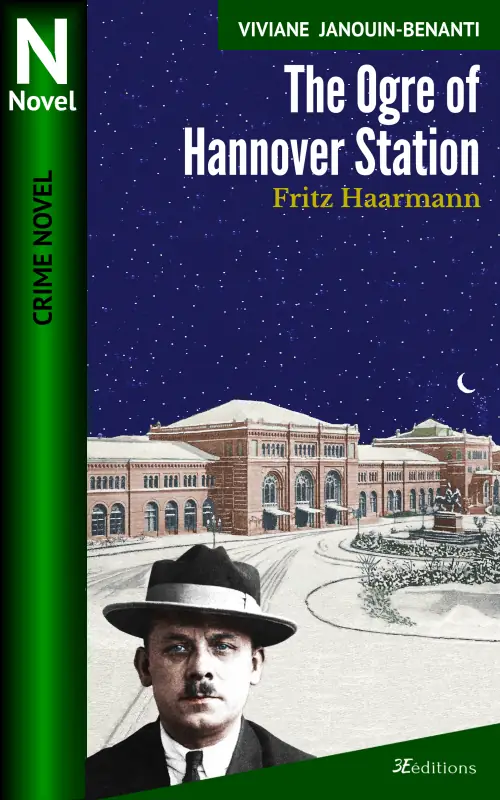
    Book cover: The Ogre of Hannover Station, Fritz Haarmann

    Here’s the short version first: if you like true-crime that reads like a novel, if you’re curious about how a city’s hunger, chaos, and indifference can incubate a predator, and if you prefer authors who focus more on people than gore, then Viviane Janouin-Benanti’s The Ogre of Hannover Station: Fritz Haarmann is absolutely worth your time. In clear, swift chapters, she reconstructs the life and crimes of Germany’s most infamous station-stalker and the investigation that finally stopped him—without wallowing in sensationalism. The English edition from 3E éditions (2024), translated by Elizabeth Blood, is crisp and accessible, and it carries a thrum of dread from the first scene to the last.

    What it’s about (and why it grips you)

    Viviane Janouin-Benanti opens not with a gruesome tableau but with a boy at a table, embroidering alongside his mother; from the start she frames Fritz Haarmann within a household where devotion and dysfunction coil together. The portrait is unsettling: a son cherished to the point of complicity, a father he’s taught to despise, and a childhood already bending toward predation as the cellar of the apartment building becomes his private hunting ground. The scenes are lean and sober, designed to unsettle because they feel ordinary—thin walls, neighbors passing in the stairwell, a mother who looks the other way.

    From there the canvas widens to Hannover between 1918 and 1924, a city gutted by war and inflation. Police resources are frayed, the black market flourishes, and missing-person slips pile up on a weary chief’s desk. Viviane Janouin-Benanti keeps returning to the train station—Hannover’s beating, seedy heart—where runaways, job-seekers, and boys escaping violent homes drift through the waiting room and into Haarmann’s path. That recurring setting isn’t just atmospheric; it’s structural. Whole swaths of the case orbit that concourse, and the book uses it like a stage on which similar scenes play out with chilling variation.

    The book’s middle third covers the years when Haarmann perfects his methods and his cover. Viviane Janouin-Benanti shows how he insinuated himself as a small-time dealer and police informant, cultivated a clean, almost official bearing, and befriended people who could inadvertently help him move clothes and other property taken from victims. Key vignettes—like the hairdresser at the station who watches Haarmann glide past a document check, or two sex workers carrying a suspicious “cut of meat” to the police—convey a pattern: witnesses sense something is wrong, but institutions shrug; by the time anyone acts, another boy is gone.

    Viviane Janouin-Benanti is careful with victims, too. She sketches family dynamics in quick strokes—a strict father, a dutiful student bored by his own perfection, a boy seduced by the promise of hot chocolate after a rainstorm—so that when a life breaks off the page, you feel its shape. These are not mere names on a list. In one of the book’s most quietly devastating sequences, she tracks the Kayser case from the casual cruelty of classmates plying him with beer to the practiced ease with which Haarmann interposes himself as a “familiar” adult; the aftermath ripples through a shopkeeper, a restaurant owner, and a police chief who is tired and much too late.

    Monsters, enablers, and an “us” that failed

    This is not just a killer’s chronicle; it is a study in complicity—private, commercial, and institutional. Haarmann’s lover, the younger Hans Grans, is a constant, corrosive presence. The book doesn’t overtheorize their bond; instead it gives you moments: Grans angling for a victim’s suit, playing Cupid when it suits him, recoiling only when the bodies threaten his own comfort, and, later, trying to save himself in court as Haarmann oscillates between protection and accusation. It’s a relationship that is pitiful, mercenary, and—at the trial—fatally performative.

    The police are not caricatured as fools; they are shown as outmatched, sometimes compromised, and often blinkered. Chief Retz, peppered through the narrative, is a study in fatigue: he hears the rumors, stacks the files, admires the green hat “gift” on his peg, and tells himself the station is merely where runaways board trains. In one darkly comic-and-awful beat, he ferries a wrapped hunk of “meat” to the medical examiner, who eyes it and dismisses it as pork; by the time the river is dragged, there’s no room for denial left. The institutional failure is incremental and human—exactly what makes it feel so contemporary.

    Haarmann himself is never mystified into a gothic cipher. What emerges is a petty, manipulative man with the gift of reading a room and the terror of losing control. Viviane Janouin-Benanti threads recurring motifs—his lifelong dread of the asylum, his sudden recitations from the Bible after a killing, his fussy pride in clothes and neatness—to show a personality that is at once banal and chilling. The book is frank about sexual violence, but the author keeps her camera above the line of the unspeakable; she is more interested in the predator’s choreography—how he chooses, how he lies, what he fears—than in lingering over wounds. It’s an ethical choice that gives the story weight rather than shine.

    The investigation that finally bit down

    When the narrative turns from rumor to evidence, Viviane Janouin-Benanti tightens the screws with procedural detail. The arrest in June 1924 feels like a dam giving way: officers fan out to search his two addresses; families of missing boys are summoned to identify clothing laid out in grim profusion; a one-way mirror confrontation yields a witness who remembers the “police officer” who lured his friend away. The river dredging sequence, which uncovers more than 1,500 bones from boys aged roughly seven to twenty-five, arrives like a collective reckoning—not just with what Haarmann has done, but with everything the city and its guardians ignored.

    The trial plays as a grotesque theater. Viviane Janouin-Benanti lets the scene speak: the cigars and quips, the courtroom bravado, the self-mythologizing number (“let’s say fifty, or more if you want”), the repeated plea for the guillotine rather than the asylum. Around him, exhibits pile up—clothes, toolboxes—and families testify while the accused preens and postures. The author doesn’t editorialize much; the horror is in the mismatch between the gravity of loss and the clownish self-regard at the dock. The verdict is death—both for Haarmann and, initially, for Grans. (Grans’s sentence is later reduced on appeal.) Haarmann is executed the following spring.

    How it’s told (and why it works)

    Viviane Janouin-Benanti calls these books “novels based on true events,” and the approach here will feel familiar to readers of narrative nonfiction: short, cinematic scenes; a rotation of viewpoints (parents, neighbors, police, the killer); and a firm grounding in documented fact. She resists two common traps of the genre—the clinical catalogue and the lurid blow-by-blow—opting instead for moral and psychological texture. Even in a paragraph or two, a family becomes more than a victim’s surname; even a minor neighbor acquires a habit, a limp, a reason for looking the other way. That restraint in tone—“sensitive and restrained,” as one early appraisal in the book notes—does not blunt the horror; it sharpens it.

    Another strength is the way she uses repetition as structure. The station: again. A boy alone in the rain: again. A parent at a desk opposite Chief Retz: again. Far from monotonous, the cadence drives home how routine and predictable the predator’s pattern became—and how institutionally convenient it was to call each new disappearance a runaway. When the screws finally turn (the search, the clothes, the river), the reader feels the release not as triumph but as an indictment.

    The book’s architecture includes a photo album at the end—Hannover station, the Leine, the Rote Reihe apartment, even the infamous cupboard—plus snapshots of figures like Grans and images from the trial. It’s sobering, not salacious, and it anchors the reconstruction in places you can picture. The inclusion underlines that this isn’t a gothic fable; it happened in rooms, stairwells, courtyards, and a city river most residents had stopped really seeing.

    Translation notes

    Elizabeth Blood’s translation is invisible in the best way. Dialogue beats are brisk and idiomatic; chapter endings land with a clean snap; there’s a steady register that never lapses into either archaisms or modern slang that would jar the period mood. Given how often the prose skirts charged material, that steadiness matters. The back matter notes Blood’s background in French literature, and you can feel the academic discipline in the economy of choices—never fussy, never flat.

    The bigger picture

    Because the book stays close to scene and character, its social argument arises indirectly. Yet it is unmistakable. Viviane Janouin-Benanti shows how a city’s miseries—hunger, overcrowding, postwar demoralization—made boys vulnerable and officials deferential to anyone who looked like order. She is frank about class: early disappearances from poor families largely land with a thud in the station’s echo chamber; attention sharpens when sons of the well-to-do vanish. She is frank, too, about sexuality: the point is not that Haarmann is homosexual; it’s the way he weaponizes sex, trust, and class markers (a new suit, a book satchel, a promise of a warm drink) in a society that polices desire and looks away from exploitation. The net result is a story that’s historical but uncomfortably current.

    Will you want to read it?

    That depends on your threshold. The author promises not to dwell on the sordid, and she keeps that promise, but she does not euphemize the crimes or their aftermath. Readers sensitive to depictions of violence against minors should know that while scenes are written with restraint, they are still harrowing. The payoff is understanding: you come away seeing how a predator’s ordinary mask can be made, how institutions can be softened by gifts and small favors, and how a city can learn to hear the station’s hum as background noise until the river itself starts talking.

    For readers of Erik Larson-style nonfiction; for fans of Emmanuel Carrère’s cool, penetrating eye; for anyone interested in the porous borders between novel and reportage—this is prime territory. The pacing is fast (think two or three pages per scene), the cast vivid even in cameo, and the moral questions—about responsibility, about the limits of “simple-mindedness” as a shield, about how easily bureaucracies can be gaslit—linger long after the final chapter.

    A few standout moments (no spoilers beyond the history)

    • The “pork” episode. Two women drop a bundle on the police chief’s desk, and the medical examiner waves it off. It’s a bleakly comic set piece that lands twice—first as denial, and later as tragic foreshadowing.
    • The hat on the peg. Retz’s bright green gift—an almost silly detail—becomes a moral weight he keeps sidestepping. It’s a symbol of how small courtesies can blunt suspicion.
    • The river sequence. The order to probe the Leine inch by inch is as cinematic as anything in the book, and the number of bones recovered is staggering. It’s the moment the city can no longer lie to itself.
    • The trial’s theater. Cigars, Bible verses, and the killer’s performative bravado set against mothers who faint at the sight of a monogrammed suit. The mismatch is sickening and unforgettable.

    Verdict

    The Ogre of Hannover Station is both gripping and careful, an unusually humane entry in a genre that often confuses cruelty with candor. Viviane Janouin-Benanti’s gift is perspective: she sees the killer clearly, but she refuses to let him eclipse the parents who search, the boys who make one small wrong choice in a dark week, and the officials who find a hundred reasons not to act. The final chapters—arrest, river, trial, execution—deliver the expected closure; the closing “Photo Album” and notes on the author’s creative-nonfiction method remind you this is history, not myth. You close the book not with prurient satisfaction, but with a sharper sense of how such a story becomes possible, and what it takes to stop it. Highly recommended, with the caveat that its restraint is moral, not anesthetic: the pain is real, and the author honors it.

    Publication details: 3E éditions, 2024; translated by Elizabeth Blood; ISBN 978-2-37885-104-0.


    Where to buy the book:

    Amazon

    Price: $25.00

    Price: $16.00

    Price: $4.99


    Apple-Books

    Price: $4.99


    Kobo

    Price: $4.99


    Google Books

    Price: $4.99

  • The Infamous Dandy

    The Infamous Dandy

    Henri Pranzini

    by Viviane Janouin-Benanti

    Translated by Elizabeth Blood

    Book cover: The Infamous Dandy, Henri Pranzini

    Viviane Janouin-Benanti’s The Infamous Dandy: Henri Pranzini is historical true crime written with the pacing of a novel and the rigor of a case file. It opens in sun-blazed Alexandria in the 1860s and closes, two decades later, at a Paris scaffold at dawn. In between, it braids a cosmopolitan coming-of-age, a slow-motion social climb, and one of the 19th century’s most sensational criminal investigations. The result is an immersive, propulsive portrait of a man who could talk his way into salons, out of scrapes, and—until he couldn’t—around the truth. The book’s power lies in the way it widens the frame: this isn’t only “the Pranzini case,” it’s a panorama of empires, cities, and people caught in his orbit—devotees, dupes, investigators, and a child saint watching from Normandy. The “crime novel from life” that emerges is both highly readable and meticulously sourced.

    What it’s about (without spoiling the turns)

    Viviane Janouin-Benanti begins far from Paris: in Alexandria, where the boy Enrico—soon to rename himself Henri—learns languages and ambition from Selim, an octogenarian guide who once served under Napoleon and stayed in Egypt to build a tourism agency. The early chapters are bright with detail: bustling Sherif Pasha Street; the Nabi Daniel Mosque; Adhoura, a seafood joint where mint tea follows calamari fritters; and a kite hawk hanging in the thermals over the baths while Selim and the boy talk about Mamluks, freedom, and fortunes. The scenes are tactile enough to taste the salt on the plates and on the air.

    Viviane Janouin-Benanti then sets young Henri against capital-H History. He watches the inauguration of the Suez Canal—caravans of crowned heads, orchestras, fireworks—and decides that staying put will never be enough; languages and charm will be his passage. The book is as interested in why he wants to belong as in how he gets in. It’s a savvy choice: the social story becomes the psychological one.

    From there, the narrative tours the British campaigns on the Nile, the anti-slavery push, Cairo salons and Paris boulevards, and the learning of “useful languages” that will make this handsome polyglot a plausible interpreter, art broker, Pullman conductor, or, when he needs to be, a gentleman. The early portrait is of a chameleon with formidable self-belief and one fatal appetite: gambling. Viviane Janouin-Benanti plants that seed early; Selim warns him that gamblers end up “shirtless,” and the book quietly tracks how want twists into necessity.

    In Paris, Viviane Janouin-Benanti surrounds Henri with three women whose roles illuminate different sides of him. There is Antoinette Sabatier, the devoted, older lover who feeds and clothes him and will later, heartbreakingly, try to offer an alibi before telling the truth; the countess Thérèse Tabany, whose exchange of letters with Henri shows how his courtly pen could disarm even a practiced skeptic; and, crucially, Régine de Montille (Marie Régnault), a famed courtesan with an apartment at 17 Rue Montaigne, a maid (Annette Gremeret), and a beloved child, Marie-Louise. Viviane Janouin-Benanti renders their first meeting with cinematic flair—Chopin at the piano, cassis liqueurs, and a tour of the opulent rooms—while letting us see what Henri sees: the jewelry, the safe, the scale of her life.

    The novel’s hinge is the night of March 8–9, 1887. Viviane Janouin-Benanti paces it with dreadful calm: Régine, weary and tipsy, waits for a visitor; the child goes off to bed; and the man who never quite belongs arrives with designs he has already rehearsed. The depiction is neither lurid nor coy; the author trusts the reader to connect what has been foreshadowed with what follows in the papers and the courtroom.

    The investigation that ensues is painstaking and, at times, shockingly modern: a package posted under an alias; the sale of jewelry down south; a self-incriminating “fake letter” that drops telltale linguistic mistakes (calling Régine “Madame Montille” and using the foreign-sounding alterings instead of alterations); and a judge who reads style as evidence. Viviane Janouin-Benanti’s reconstruction of these threads is gripping in its procedural exactitude.

    From the police chiefs (Taylor and Goron) to the examining magistrate (Adolphe Guillot) to the defense (the future star advocate Maître Demange), the cast of officials is large and vividly sketched. The trial itself, presided over by Onfroy de Bréville, plays to a packed, fashion-plate audience until the judge reprimands them: this isn’t theater; a man’s life is at stake. Viviane Janouin-Benanti makes the courtroom feel humid with breath and opinion.

    What happens next is known, but the telling is fresh. The verdict is death; Henri’s “nothing to say” is a whimper after months of bravura; and the book’s final movement begins at 4:45 a.m. with a wake-up in cell no. 2. There’s a chilling efficiency to the way orders are signed, assistants gather, and the blade is readied; an eerie intimacy in Henri thanking a guard for helping with his shoes; and a jolt when he declares, on the steps: “God is great…Woe betide those who do not praise his Holy Name!” Moments later, he pushes away the chaplain but then—this is the line generations remember—kisses the crucifix before the end.

    Viviane Janouin-Benanti doesn’t leave the scene with the crowd. She follows the body to Gentilly, then to the medical school, where a dean weighs organs and a lab assistant takes a cast of the head; it’s unsettling—deliberately so—how quickly a cause célèbre becomes a specimen. In the very next breath, she shows us 14-year-old Thérèse Martin (the future Saint Thérèse of Lisieux) reading La Croix, seeing that kiss reported, and taking it as the “sign” she had begged for in prayer. It’s a stark, unforgettable juxtaposition of the Paris of science and the France of faith.

    How it reads

    Although based on archives of the City of Paris and the Bibliothèque Nationale and anchored by 1887 press accounts, the book is told as a fluid narrative. The translator, Elizabeth Blood, keeps the sentences clear and quick, letting the period detail do the atmosphere-building rather than archaizing the prose. The effect is modern without being anachronistic—ideal for readers who want their history vivid, not dusty.

    Viviane Janouin-Benanti writes with a documentarian’s patience and a novelist’s eye for set piece. The Alexandria chapters glow; the first walk through Régine’s red-papered hallway is heady; the trial scenes crackle with conflicting certainties. She’s especially deft at social x-rays: in a single exchange she can capture why a courtesan would be curious about a well-dressed foreigner and why a gambler would try Chopin first, and conversation after.

    Equally strong is the moral chiaroscuro. Henri’s charm is never in doubt—women write him fan mail even as he awaits execution; guards like him; priests note his composure—but Viviane Janouin-Benanti also lets us near that chill of self-justification. On the train south, after the crime, his mind flickers through rationalizations with clinical calm. It’s a difficult passage to read because it feels true to the psychology the book has built.

    The themes that linger

    Belonging and performance. From the moment he resolves to drop “Enrico” for “Henri,” the hero (or anti-hero) is acting toward an audience—tourists, officers, lovers, judges. The novel suggests that social performance can be a ladder and a trap: the same fluency that opens doors can blur the self until only appetite remains. The letters to the countess are case studies in seduction by ink; the “fake letter” planted at a crime scene curdles that skill into evidence.

    Empire and circulation. This is a story of a man in motion—Egypt, India, Afghanistan, Paris, Marseille—and of goods and people that move with him: diamonds, banknotes, love notes, rumors. The Suez Canal opening is more than a spectacular episode; it’s the infrastructure beneath the plot, the world becoming traversable for someone like Henri. The book’s photo album underlines this, with images from Alexandria, the canal, British expeditions, Paris snow, even the hotels and streets where crucial meetings occur.

    Faith, science, and the appetite for spectacle. A Saint’s prayer, a judge’s summation, a public that treats the courtroom like a premiere, and a dean weighing a notorious brain—Viviane Janouin-Benanti trusts readers to notice how late-century France kept both relic and report, both crucifix and calipers, within reach. The kiss on the crucifix, read by Thérèse as grace, is placed beside the autopsy ledger; their coexistence is the point.

    Women’s peril and agency. Régine’s resources can’t keep danger from stepping through her door; Annette’s loyalty and Marie-Louise’s innocence are the book’s ache. Yet it’s also women who show the clearest moral spines: Antoinette revises her statement and refuses to perjure herself, at cost to her own heart; Thérèse insists that even the worst sinner must be prayed for.

    Standout scenes and details

    • The tour of 17 Rue Montaigne. It’s the novel in miniature: wealth as theater, charm as access, music as mask. The spread of “fashionable books,” the bell summoning Annette, the Chopin waltz—each detail doubles as a clue to how Henri works a room.
    • The sleuthing around the letter. Few true-crime reconstructions make linguistic nuance feel so damning. “Madame Montille” instead of “de Montille,” alterings instead of alterations: a fingerprint of syntax.
    • The posting of the package. A clerk’s register, a weight (475 grams), a false sender (“Dr. Forster”), and the small clink that convinces the postman he’s hearing “instruments”—a whole plot in a few desk-level gestures.
    • The theater of the trial. The judge’s warning against opera glasses; the defendant’s fixed calm; the women spectators “dressed to the hilt” as if for opening night—Viviane Janouin-Benanti has an archivist’s ear for quotes and an eye for crowd behavior.
    • The dawn at La Roquette. The quotation marks are sparse here and that’s exactly right; ceremony, bureaucracy, and bravado collide in a few clipped minutes. Then the hush after the blade and the ordinary business of wagons and paperwork.

    What the book is (and isn’t)

    This is not a whodunit with a late twist; it’s a how-was-this-possible and a what-did-it-mean—meticulous narrative nonfiction that reads like a novel. Viviane Janouin-Benanti surveys the record (there’s a compact bibliography; the periodicals are named; the archives are cited), but she’s uninterested in pretending the 1887 press was neutral. She gives you the chatter and the evidence, the courtroom and the backstairs, and she allows herself psychological inferences where the documents invite them. The tone is compassionate without being credulous.

    Elizabeth Blood’s translation lets the voices hum at their natural register: Selim’s warm pedagogy in Alexandria; Antoinette’s plainspoken devotion; the judge’s studied severity; Henri’s ingratiating grace. You never feel the translator reaching for verbal antique shop props; the English is clean, contemporary, and swift.

    Physically, the book helps you visualize what you’ve read. After nine parts (I–IX), there’s a photo album—camels in Alexandria, the Nabi Daniel Mosque, the canal under construction, Pranzini in uniform, the Hôtel Continental across from the Tuileries, 1887 Paris in snow, portraits of Henri and Régine, and maps of the British expeditions he joined. It feels like you step from the vellum of the story into its sepia.

    Why you might love it

    • You want true crime with context. If you’re tired of podcasts that reduce tragedies to “beats,” you’ll appreciate how this book restores social and historical complexity—from Alexandria’s mixed neighborhoods to the rituals of Parisian high life to the machinery of the Third Republic.
    • You like courtroom dramas that are really character dramas. The spectacle is here, yes, but what lasts are the moral choices: Antoinette’s reversal; Guillot’s summing-up; Henri’s last-minute gesture; Thérèse’s stubborn, teenage hope.
    • You’re a sucker for richly drawn places. Alexandria, Suez, Paris: Viviane Janouin-Benanti writes rooms you can smell and streets you can hear. The book is a travelogue of temptation.

    A couple of caveats (more like content notes)

    The book faithfully depicts violence and its aftermath—never gratuitously, but honestly. The brief, clinical account of the autopsy and the era’s macabre “souvenirs” may unsettle some readers; it’s meant to. Likewise the quiet, devastating domestic scenes before the crime. If you prefer your historicals sanitized, this isn’t that.

    The verdict

    The Infamous Dandy is that rare true-crime narrative that refuses to flatten its subjects into monsters and martyrs. Viviane Janouin-Benanti gives us a seducer who could play Chopin and play people; a courtesan who could command a room and still be fatally vulnerable; an ordinary woman whose truth-telling costs her the only man she loved; a teenage girl whose prayer life intersects with a Paris execution at five in the morning. By the end, the “case” has become a study in the performances people give—to others, to the court, to God, to themselves—and the moment those performances fail. If you like your history tense, humane, and alive to contradiction, this is a book to clear a weekend for. And when you finish the last page, don’t skip the album: seeing Alexandria’s camels lined up for tourists—just as Selim once did—will make the opening chapters echo in a newly tender key.


    Where to buy the book:

    Amazon

    Price: $28.00

    Price: $18.00

    Price: $4.99


    Apple-Books

    Price: $4.99


    Kobo

    Price: $4.99


    Google Books

    Price: $4.99

  • Beneath the Moor

    Beneath the Moor

    How Ian Brady and Myra Hindley Became the Moors Murderers

    By Viviane Janouin-Benanti

    Translated into English by Elizabeth Blood


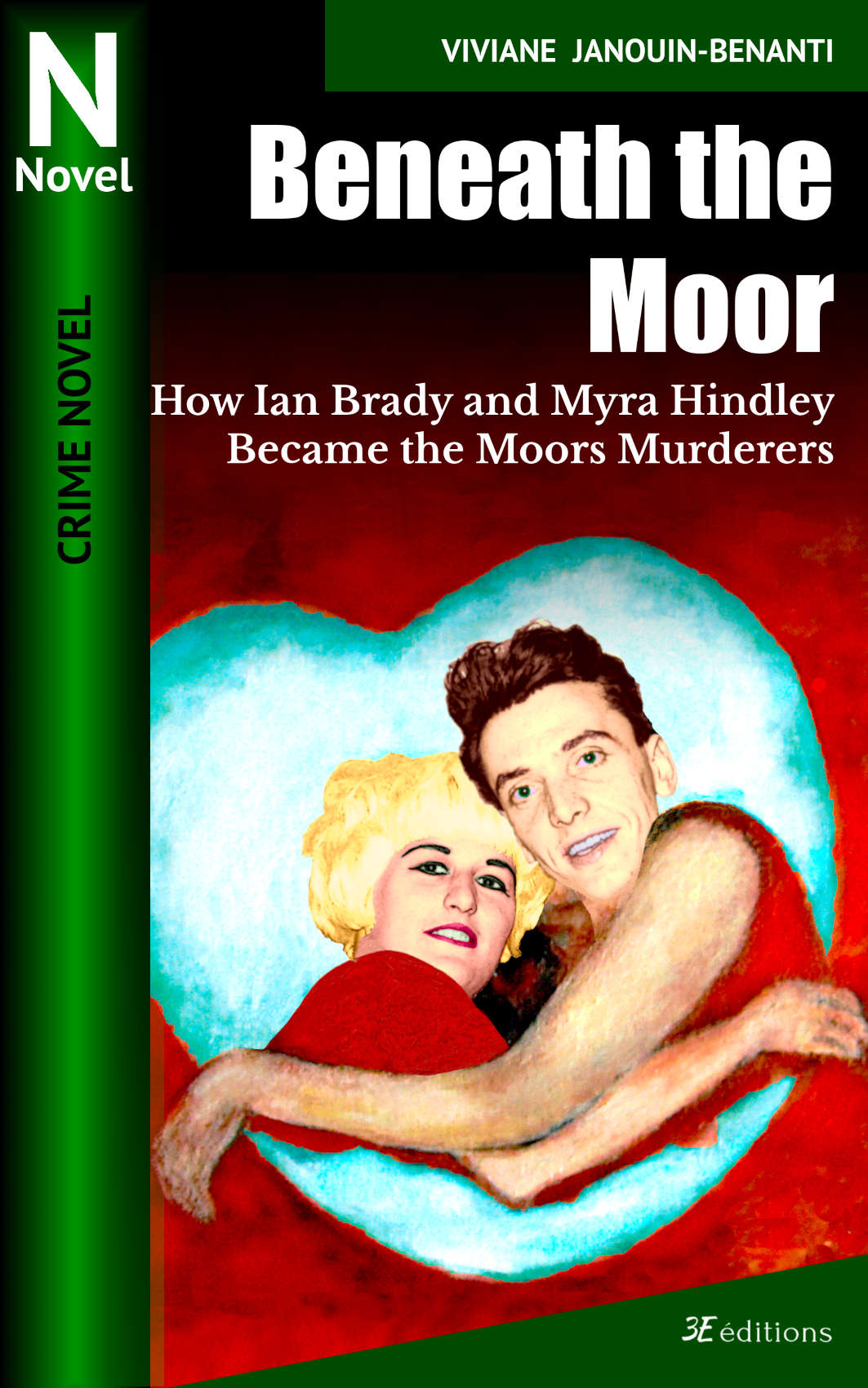
    Book cover: Beneath the Moor, How Ian Brady and Myra Hindley Became the Moors Murderers

    Introduction – When Evil Wears an Ordinary Face

    Some crimes exist only in their own time. Others echo across generations, staining the national memory. The Moors Murders, committed in Britain between 1963 and 1965, belong firmly in the latter category. For many, the very names Ian Brady and Myra Hindley conjure a shiver – a reminder of childhood warnings, tabloid headlines, and grainy photographs of a stern-faced woman and a man with cold eyes.

    In Beneath the Moor, Viviane Janouin-Benanti approaches this notorious case not with sensationalism, but with a scholar’s precision and a storyteller’s sense of pace. The book promises more than a straightforward crime recap – it seeks to understand how two seemingly ordinary people formed a deadly alliance, and how the psychological chemistry between them turned murderous fantasy into grim reality.


    Setting the Stage – Britain in the Early 1960s

    Before we meet Brady and Hindley, Viviane Janouin-Benanti paints a picture of the society in which their story unfolds. Post-war Britain was entering a new decade of optimism and cultural transformation. The Beatles were about to conquer the charts, working-class youth found new freedom in fashion and nightlife, and the shadow of wartime rationing was fading. Yet the period’s innocence was fragile.

    Against this backdrop, the crimes of the Moors Murderers hit the country like a thunderclap. They were not faceless monsters in a distant place; they were an office worker and a clerk from Manchester – people who could have been your neighbours.


    Part One – Childhood Shadows

    Viviane Janouin-Benanti devotes substantial space to the killers’ formative years, knowing that understanding their backgrounds is essential to understanding the case.

    Ian Brady was born in Glasgow in 1938 to an unmarried waitress, an origin that in that era carried social stigma. Adopted by a couple who struggled to discipline him, Brady was an intelligent child but prone to cruelty and rebellion. By adolescence, he was already dabbling in petty crime and immersing himself in books that glorified domination and violence. Works by Nietzsche, Hitler’s Mein Kampf, and the Marquis de Sade shaped his worldview – one in which empathy was weakness and power was the highest aim.

    Myra Hindley, born in 1942 in Manchester, grew up in a working-class family that combined affection with volatility. Athletic and determined, she was fiercely loyal to those she admired. After leaving school at fifteen, she took a series of jobs, eventually landing a typist position at Millwards, a chemical distributor. It was here that her path would cross with Brady’s.


    Part Two – The Fatal Meeting

    Their first encounter in 1961 was unremarkable to outsiders. But for Hindley, Brady’s aloof, intellectual persona was magnetic. She began keeping a diary of their interactions, describing her growing fascination. Brady saw in Hindley someone who could be moulded – loyal, impressionable, and willing to adopt his worldview.

    The courtship that followed was anything but conventional. Brady gave Hindley reading lists filled with sadistic and political tracts. They went on motorcycle rides across the moors, taking photographs in which Hindley’s expression already hinted at a hardened persona. Slowly, the pair’s private world became an echo chamber for Brady’s violent fantasies.


    Part Three – The Murders

    This is the heart of Beneath the Moor, and Viviane Janouin-Benanti treats each killing with restraint and clarity. She neither sanitises nor sensationalises, allowing the facts to horrify without embellishment.

    1. Pauline Reade (July 1963)
      A friend of Hindley’s younger sister, Pauline was persuaded to accompany Hindley to search for a glove supposedly lost on the moors. Brady was waiting. Pauline was murdered and buried in a shallow grave. This first killing set the pattern: Hindley as the lure, Brady as the executioner.
    2. John Kilbride (November 1963)
      A 12-year-old boy at a market, offered a ride home by Hindley. Instead, he was driven to the moors. The calculated deception of offering safety is one of the most chilling aspects of the case – a pattern repeated again and again.
    3. Keith Bennett (June 1964)
      Disappearing while on his way to visit his grandmother, Keith’s remains have never been found. Decades later, his mother’s public appeals for Brady to reveal the burial site became one of the enduring tragedies of the case.
    4. Lesley Ann Downey (December 1964)
      The murder that produced the most damning evidence: a 16-minute audio tape of the girl’s torture, played in court to the horror of all present. Photographs found later showed Lesley Ann bound and terrified.
    5. Edward Evans (October 1965)
      The killing that finally brought the pair down. David Smith, Hindley’s brother-in-law, was present when Brady attacked Evans with an axe. Traumatised, Smith went to the police, setting the investigation in motion.

    Part Four – The Investigation

    Smith’s statement gave police a starting point, but the case against Brady and Hindley built slowly. Viviane Janouin-Benanti details the painstaking police work: searches of their home, the discovery of photographs on the moors, and the grim unearthing of graves.

    The most haunting image – Hindley smiling with her dog, standing on the very spot where a child was buried – became iconic in the worst possible way.


    Part Five – The Trial of 1966

    The trial was a media sensation. Hindley arrived in court well-dressed and composed, her platinum hair styled immaculately. Some journalists noted her calm demeanour; others saw it as evidence of coldness. Brady remained aloof, occasionally smirking.

    The Lesley Ann Downey tape was played in court. Jurors wept; even seasoned police officers had to leave the room. The press described the moment as one of the most harrowing in British legal history.

    Both were convicted and sentenced to life imprisonment, with the strong recommendation that they never be released.


    Part Six – Life Behind Bars

    Viviane Janouin-Benanti follows both killers into prison life. Brady manipulated the media from his cell, wrote essays on philosophy, and later went on hunger strike, leading to his confinement in Ashworth Hospital. Hindley sought parole repeatedly, alternating between portraying herself as Brady’s victim and admitting her role.

    For the families of the victims, particularly Winnie Johnson, mother of Keith Bennett, the pain was unending. Brady’s refusal to reveal Keith’s burial site was a cruelty that persisted until his death in 2017.


    Themes and Analysis

    Where Beneath the Moor excels is in its thematic depth:

    • Psychological Entanglement – The symbiotic nature of Brady and Hindley’s relationship created a closed loop where fantasy became reality.
    • The Banality of Evil – They lived in ordinary neighbourhoods, went to work, and attended family events – all while hiding unimaginable crimes.
    • Weaponised Trust – Hindley’s presence lowered victims’ guard. This exploitation of social norms is one of the most disturbing elements.

    Viviane Janouin-Benanti resists simple answers. The book doesn’t claim to solve the mystery of “why” – only to illuminate the conditions and choices that made it possible.


    Style and Accessibility

    The prose is crisp and unpretentious, accessible to general readers while satisfying those looking for detail. The pacing – from biography to crimes, investigation, trial, and aftermath – keeps the reader engaged despite the dark material. The victims remain central throughout; they are not reduced to mere case numbers.


    Final Verdict

    Beneath the Moor is both a page-turner and a sobering study in the depths of human cruelty. Viviane Janouin-Benanti offers a definitive account of the Moors Murders, one that respects the victims, dissects the killers, and forces the reader to confront the uncomfortable truth that evil often hides behind an ordinary face. This is essential reading for true crime enthusiasts, criminology students, and anyone seeking to understand not just what happened on the moors, but how – and why – it happened..


    Where to buy the book:

    Amazon

    Price: $26.00

    Price: $16.00

    Price: $4.99


    Apple-Books

    Price: $4.99


    Kobo

    Price: $4.99


    Google Books

    Price: $4.99

  • The Poitiers Affair

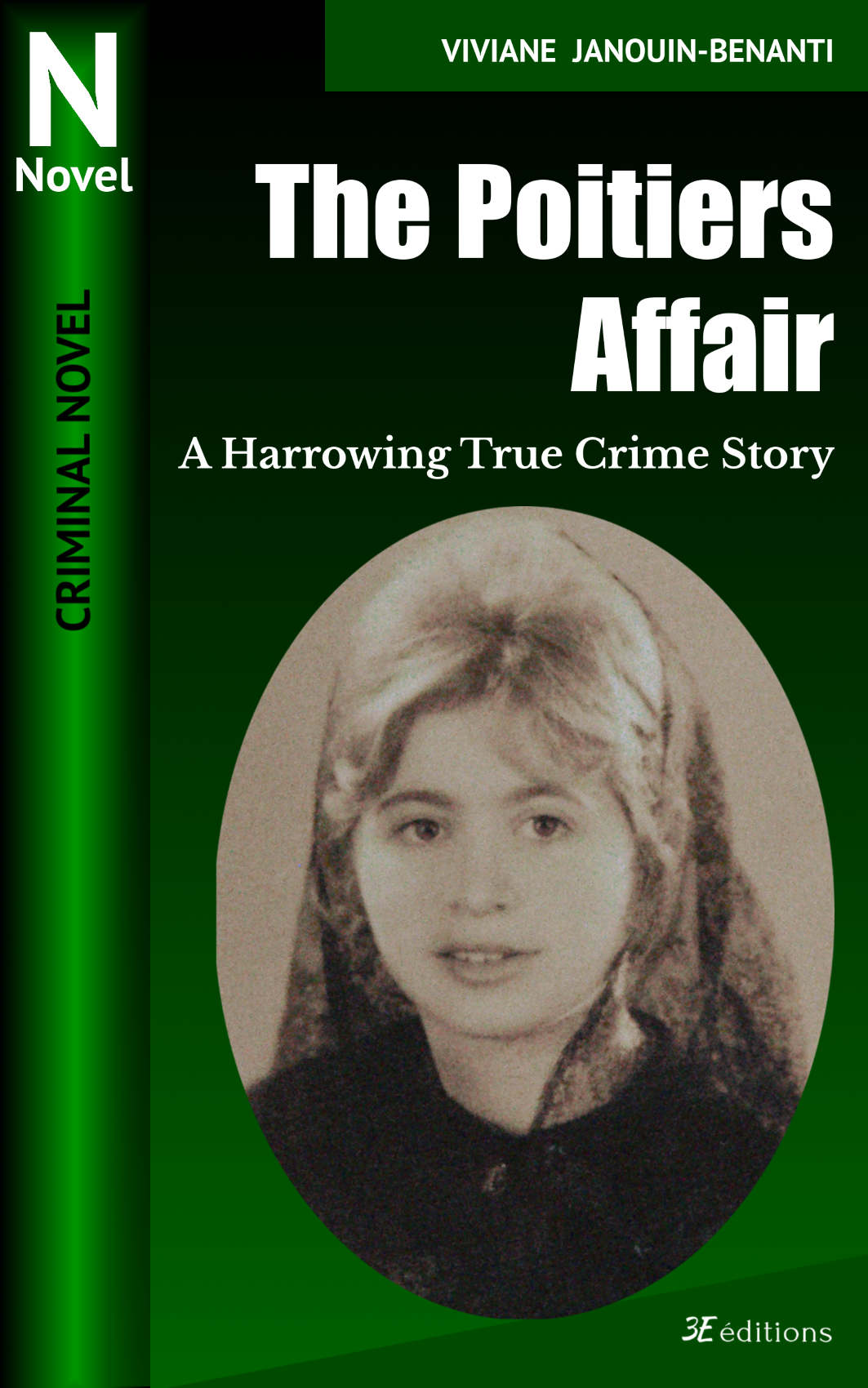
    The Poitiers Affair

    A Harrowing True Crime Story

    Viviane Janouin-Benanti

    Translated into English by Elizabeth Blood

    The Poitiers Affair, A Harrowing True Crime Story

    Introduction

    In The Poitiers Affair: A Harrowing True Crime Story, Viviane Janouin-Benanti revives one of the most chilling and little-known true crime cases in 19th-century France: the secret imprisonment of Blanche Monnier, a young woman from the high society of Poitiers, held captive for nearly 25 years by her own mother and brother in a sealed, windowless room.

    The story, told with restraint, documentary precision, and respect for its central figure, is not only shocking for the nature of the crime itself, but for the deeper question it raises: how could such horror take place, undetected, in the heart of a respectable and powerful family?


    The True Story Behind the Book

    Blanche Monnier was born into a wealthy and conservative bourgeois family in Poitiers, France. Her father, Émile Monnier, was a former dean of the Faculty of Letters and a widely respected man. Her mother, Louise Monnier (née de Marcillat), came from aristocratic roots. Blanche was raised in privilege, educated, well-read, and considered beautiful and independent in thought.

    Around 1876, Blanche, at age 25, fell in love with an older man – a republican lawyer – and expressed her desire to marry him. Her mother, a strict monarchist, and her brother Marcel, a career bureaucrat, were both outraged by this socially and politically unacceptable match.

    When Blanche persisted in her desire to marry outside the expectations of class and politics, her family took an unthinkable decision: they locked her away in a shuttered room in the attic of their house, and kept her there for 24 years.


    A Life in Darkness

    From 1876 to 1901, Blanche lived in a filthy, vermin-infested room. The window was boarded up. The door was locked with multiple bolts. She slept on a rotting straw mattress. She was denied sunlight, hygiene, human company, and contact with the outside world. Food was brought to her irregularly; she was rarely washed or clothed.

    What’s even more horrifying is that this happened in the middle of a respectable town house – not a remote mansion, not a dungeon, but a building in a well-populated street in Poitiers. Servants worked in the house. Neighbors passed by. Her brother Marcel rose through the ranks of the French civil service. Her mother continued to host visitors, attend mass, and maintain the family’s public image.

    Blanche was literally hidden in plain sight – and no one intervened.


    Discovery and Rescue

    Blanche’s liberation only came by accident. In 1901, the Paris Attorney General received an anonymous letter stating that a woman was being held captive in the Monnier house in Poitiers. The letter was written in simple language, unsigned, but detailed enough to be taken seriously.

    Police were sent to investigate. When they arrived at the Monnier home, they were told nothing was wrong. But during the search, they forced open the door to the upstairs room – and discovered Blanche.

    She was malnourished, weighing just 25 kilos (55 pounds). Her bones were visible through her skin. The room was covered in excrement, rot, insects, and filth. She had not seen daylight in 24 years.

    The police officers were so shocked by the smell and sight that one immediately vomited. Photographs were taken of the room as it had been found, and those images later circulated widely in the press, horrifying the public.


    The Aftermath

    Blanche was hospitalized and slowly began to recover. Physically fragile, psychologically altered, and socially disconnected, she nonetheless showed signs of lucidity and intelligence – a survivor, not a broken shell.

    Her mother, Louise Monnier, was arrested and charged with illegal detention and abuse. But before she could face trial, she died just 15 days after Blanche’s rescue – reportedly from heart failure, though some believed the public scandal hastened her death.

    Blanche’s brother, Marcel Monnier, was brought to trial. Though he claimed he had done nothing illegal – insisting his sister “was mad” and had to be isolated – the public and the court were less forgiving. He was initially convicted and sentenced to 15 months in prison, though on appeal, his sentence was overturned due to legal technicalities.

    Still, the damage was done: the Monnier name became synonymous with cruelty and secrecy.

    Blanche, for her part, spent the rest of her life under medical supervision in a care facility. She died in 1913, twelve years after her release, at the age of 64.


    How the Book Tells the Story

    Viviane Janouin-Benanti does not sensationalize. Her narrative style is clear, direct, and rooted in historical records. She reconstructs events chronologically, from Blanche’s early life and personality to the family’s ideology and control, the crime’s execution, and the final unraveling. Using archival documents, witness testimony, trial records, and press clippings, she brings the facts to the surface with care.

    What emerges is not just a timeline, but a portrait of a family obsessed with image, control, and social status – willing to erase a daughter rather than allow her to make her own choices.


    Themes

    1. Female Autonomy as Threat

    Blanche’s only “crime” was to want to marry a man her family deemed unworthy. Her punishment – total sequestration – reveals how women’s independence was seen as a direct threat to patriarchal and class-based structures. The Monniers would rather destroy Blanche’s life than risk a marriage that might “dishonor” the family.

    This is not simply a case of madness – it is social control taken to pathological extremes.

    2. Complicity Through Silence

    Perhaps the most haunting aspect of the affair is how many people must have known – or at least suspected – that something was wrong. The house was occupied. Servants came and went. Blanche was not in hiding underground, but upstairs. The silence of neighbors, employees, and even church authorities reflects a broader social sickness: the desire to preserve reputation at any cost.

    3. The Fragility of Justice

    Though Blanche was eventually rescued and her brother charged, justice was not fully served. Marcel never spent a day in prison. The mother died before trial. The law, constrained by definitions of mental health and familial authority, failed to address the full horror of what had been done.

    4. Survival and the Human Spirit

    Even more astonishing than the crime is Blanche’s survival. Though physically wrecked, she never lost her mind. She remembered names, events, books. Her recovery, though partial, shows the resilience of the human mind under conditions most people could not endure for a week, let alone two decades.


    Structure and Sources

    The book is divided into clear chapters, moving steadily from Blanche’s early years to the discovery of the crime, the legal proceedings, and the public reaction. Each stage is supported by:

    • Official medical reports
    • Police documents
    • Witness testimony
    • Letters
    • Contemporary newspaper coverage

    Photos of the crime scene are also discussed, and their cultural impact is noted. The documentation gives the story weight and credibility.


    Historical Context

    The story unfolds in the late 19th century – a time when France was struggling between monarchist and republican factions, when mental health was poorly understood, and when women were legally subordinate to male relatives. Blanche’s confinement reflects all three pressures: political ideology, legal impotence, and patriarchal obsession.

    Viviane Janouin-Benanti wisely situates the crime within this broader cultural and legal framework, making it more than an isolated horror – it becomes a symbol of systemic failure.


    Conclusion

    The Poitiers Affair is not just a shocking true crime story – it is a meticulously researched indictment of family cruelty, societal complicity, and institutional apathy. Viviane Janouin-Benanti brings Blanche Monnier’s story to light not with dramatic flair, but with compassion, discipline, and a determination to honor the truth. This is a must-read for those interested in women’s history, criminal justice, and the psychology of power. It is a disturbing yet necessary reminder that the worst crimes often happen in silence – and that telling the truth, even a century later, is an act of justice, raveled not by violence, but by the cold machinery of power.


    Where to buy the book:

    Amazon

    • Hardcover, ISBN: 978-2-37885-060-9

    Price: $21.00

    • Paperback, ISBN: 978-2-37885-059-3

    Price: $12.00

    • Kindle eBook, ISBN: 978-2-37885-058-6

    Price: $4.99


    Apple-Books

    • eBook, ISBN: 978-2-37885-056-2

    Price: $4.99


    Kobo

    • eBook, ISBN: 978-2-37885-056-2

    Price: $4.99


    Google Books

    • eBook, ISBN: 978-2-37885-056-2

    Price: $4.99